

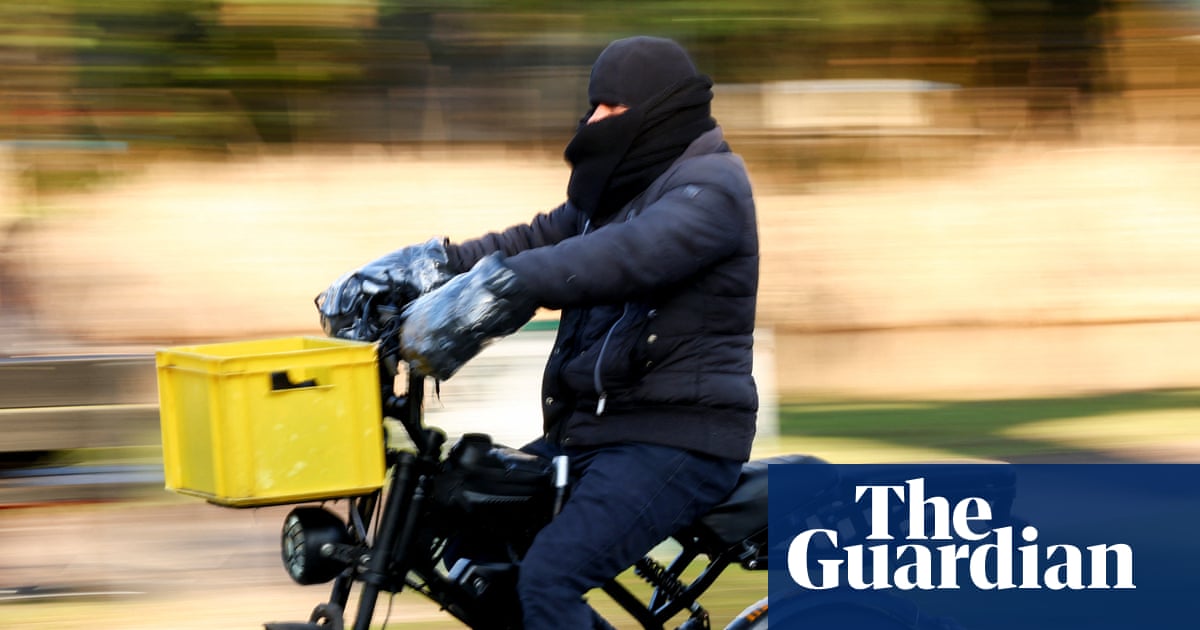
The safety organisation VeiligheidNL estimates that 5,000 fatbike riders are treated in A&E [ i.e Accident & Emergency] departments each year, on the basis of a recent sample of hospitals. “And we also see that especially these young people aged from 12 to 15 have the most accidents,” said the spokesperson Tom de Beus.
Now Amsterdam’s head of transport, Melanie van der Horst, has said “unorthodox measures” are needed and has announced that she will ban these heavy electric bikes from city parks, starting in the Vondelpark. Like the city of Enschede, which is also drawing up a city centre ban, she is acting on a stream of requests “begging me to ban the fatbikes”.
These are not fatbikes. Fatbikes are normal pedal bikes with big tires that are good in snow.
These are Fat Tire e-bikes. You should always be calling them ebikes when discussing them in English. Perhaps this is a mis translation.
It’s in the first par. of the article.
" … thick-tyred electric bikes… the Dutch call “fatbikes”
Yea, so a mis-translation. That’s not what we call them in english.
ITS IN ENGLISH.
Removed by mod
Agreed. Tyre is a city in Lebanon. Tire is the round rubber thing that encircles a wheel.
Only in American English. Everywhere else, to tire is to become tired, and a tyre is what goes around a wheel.
If we gonna just be weird about what shits called it’s a aerial wheel so fuck your Tyre or tire bullshit
Removed by mod
Every English speaking country that follows British English rather than American English.
- Core Areas: United Kingdom, Ireland, Australia, New Zealand, South Africa.
- Caribbean: Jamaica, Barbados, The Bahamas, Antigua and Barbuda, Dominica, Trinidad and Tobago.
- Other Regions: Singapore, Malta, Belize, Canada (hybrid, but with strong British influences), India.
- British Overseas Territories: Gibraltar, Bermuda, Cayman Islands, British Virgin Islands, Falkland Islands.
Is that clear enough for you ?
There’s no accounting for taste I guess.
Removed by mod
e-bike is also horribly misused. It’s everything from a bike with a little battery that kicks in a bit when you pedal, to what can only be described as an electric powered motorbike.
Agreed that it may cause some confusion but in The Netherlands the amount of electric fatbikes against plain old fatbikes is in the order of 1000:1.
Actually “ebike” is also too generic as there are multiple ebike classes. The one discussed here is the pedal-electric one that has a legitimate maximum of 25 kmph in Europe. But there’s also the speed-pedelec which can go up to 45 kmph and has type approval.
Maybe you should not be such an anglosphere-centric snob, especially in an eurocentric community.
It’s good to use the correct terminology though, especially when translating.
Okay, let’s correct some things then. Let’s start with chips, crisps and fries. Or what exactly an appartment is, bangers, boilers, entrée, first floor, etc.
As far as I can see, most people having issues with the term fatbike come from north american instances. Europeans here absolutely know what kind of vehicle is meant.
That surprises me. I’m not American and when I hear ‘fatbike’ I don’t think of the e-bike version but the regular bicycle with fat tires. The former are not common around where I live.
Have a look through this thread then. Nobody had issues with the term until someone from an NA instance brought it up.
Make it so they have to be licensed, insured and are legal on the roads. But then allow for the bikes to have speed increases.
Basically a really cheap electric motorcycle.
seen this in CH. (my first lemmy comment 🖖)
Cannot be done, as these bikes are not technically compliant for that. First you would need to upgrade the brakes, frame, lights et cetera and add mandatory features such as brake lights, a mirror, license plate holder and a horn. Then you would have to get type approval as this is mandatory for every motorized vehicle, which adds cost to every produced bike.
When you’ve done all that, your product is no longer affordable and will fall in the same price category as all other motorized scooters.
The problem is not that the product cannot be classified, the problem is that the product is being used in an illegal way such that its speed and power go beyond what is allowed, which creates safety risks for the rider and anyone else around.
Nono, don’t allow them to have more speed. It doesn’t seem you understand Dutch roads if you dat that. It will cause a lot more accidents.
Putting a license plate on it however will make it a lot easier to track stuff. And while we are on it make helmets compulsory. Then the convenience is gone and not as cool anymore.
That was sadly exactly what I was expecting from the electric motorization of bicycles. It is a history that has repeated itself many times in the last 70 or 80 years since the first combustion engine mopeds.
The fact is that the human-powered bike is at a sweet spot of efficiency and safety. Once you go faster, you need a helmet, a heavier frame, wider tyres, better brakes, wider lanes, protective clothing, protection against cold, a heavier motor for propelling all the extra weight, and so on. The energy input from you the human dwindles.
It is not any more a bicycle.
You need a helmet on purely muscle-powered bicycles, too. A helmet saved both mine and my father’s life in accidents that would not had happened were we not riding bikes that moment.
A majority of bicycle accident fatalities could have been prevented with helmets.
Wear helmets. There are cool models, too, don’t try that excuse.Oh man I got a concussion while wearing a bike helmet I probably would have died if I wasnt wearing it. And we were just kids makings jumps in the driveway…
@CyberEgg @HaraldvonBlauzahn
I lost a friend to head injury in a bike accident a month ago. (Hit by a car.)
I don’t know what state I would be in now if I hadn’t been wearing a helmet the numerous times I’ve come off.
Exposed rider of ANY vehicle using a road or a bike lane should wear a helmet. Like car seatbelts, this should be law.The annoying part is having to carry the helmet around with you when bike is parked.
i have a bike lock large enough to lock the helmet to the bike aswell
Yes, right.
But: A bike helmet won’t help you much if you have a collision at 50 km/h. If you go at moped / light motorcycle speed, you need a motorcycle helmet, too.
Yeah, obviously you need different helmets for different speeds. But the comment I responded to was worded like you wouldn’t need a helmet on bicycles at all.
In principle, this is correct. But the need for a helmet increases massively with speed.
Consider the end speed of free fall when falling a certain height - or the inverse, height in meters versus speed in kilometer per hour. It is:
10 km/h   ..... 0.39 meter
20 km/h   ..... 1.57 meter
30 km/h   ..... 3.54 meter
40 km/h   ..... 6.29 meter
50 km/h   ..... 9.83 meter
Would you jump from ten meters height into a concrete surface? Few people would, because it is almost certain that you die. But the frame pillar of a car is equally hard as such a surface.
Another data point: In the center of Copenhagen, not so many people use a helmet, but the speed is typically between 10 and 15 km/h - so many bikes there ! - and the number of serious accidents is very low. The contrary is the case for Germany.
And just to make a point: Using a helmet is always safer.
So? Nobody is arguing about this but you. Again, my point is not about speeds or certain types of helmets. I just said you should wear a helmrt on bikes FFS!
I think the point is that the convenience of being able to ride a bike without having a helmet at hand is something beneficial for the group. That it, there would be fewer cyclists if wearing a helmet was mandatory, and that would harm cyclists as a group.
By all means, if you consistently go over 20km/h on bike, wear a helmet, as at that speed it’s starting to get dangerous.
people probably said the same about seat belts once upon a time
helmets should be mandatory, just like seat belts
(and they are in australia)
Every winter in Canada people die from slipping on ice. Walking in winter should require a helmet, but people would find that absurd.
Okay give me the numbers of fatal pedestrian slips versus fatal bicycle accidents that would not have been fatal if a helmet was worn. Give me data.
Here is the python code I used to compute the above table:
 >>> def fall_height_from_fall_speed_kms(v):
 ...   v_ms=v/3.6
 ...   a = 9.81 # m / s **2
 ...   t = v_ms / a
 ...   h = t ** 2 * a / 2
 ...   return h
No we don’t need helmets. Cars must be kicked out of the bicycle’s areas instead. Fuck that carbrained propaganda.
It was not a car that made me slip on an invisible icy spot on a bridge and bang my head against the railing, resulting in a concussion. Without a helmet I’d be dead. Or worse.
Wear a fucking helmet.No thanks. I’m not gonna help the car lobby create arguments to limit our freedom and shove off the ‘guilt’ of accidents on us.
This reads like you fell on your head without wearing a helmet a few times too often.
Never fell, the single most common cause of bicycle accidents are car drivers – especially drunk ones who speed. You ain’t gonna protect against that with a helmet.
I vaguelly remember a study in Denmark (which has roughly 50/50 of people cycling with and without helmets) that showed that cyclists who wear helmets were more likely to have serious accidents than those who did not, though by a small percentage.
There are several factors that are believed to be behind such an unexpected statistic:
- Drivers actually act more dangerously around cyclists who seem better protected than around those who do not and the cyclists themselves are more reckless when they feel they’re better protected (the latter being a much broader and well known phenomenon)
- The weight of the helmet, even though it’s quite low, will on a high speed collision pull the head more towards colliding with something than otherwise - in other words, if you fall the helmet actually unbalances your head and makes it more likely your head will hit the ground.
- The human brain is much more resilient to linear shock than rotational shock - basically when something makes your head rotate the brain inside will also rotate though not instantly since it not part of the bone of your cranium, so it will instead get pulled to rotate and similarly when the head stops be pulled to stop rotating, all of which can cause tearing which can kill a person. Cycling helmets tend to make the head rotate on a collision.
- Cycling helmets are only rated to protect from collisions up to (if I remember it correctly) 15km/h
- Cycling helmets do not protect anything else than the head (which links back to the first point)
Anyways, the point being that at the kind of speed and the environment that people cycle in when just commuting in a city, bicyle helmets can actually make it slightly more dangerous.
Mind you, this doesn’t at all mean that in different situations - such as mountain biking or speed cycling - helmets aren’t a must.
In places like The Netherlands pretty much nobody uses a helmet when just cycling in the city.
I would really like to see that study. Because I have studies showing the opposite.
Here is an article (in German, sorry) summarizing and contextualising several studies. One showed that wearing a helmet resulted in car drivers keeping five centimetres less distance when overtaking the cyclist, but that study’s method was flawed and a study conducted in Berlin with better equipment and better method (bigger sample size, different routes, women being actually test subjects and not just represented by a guy with a wig, etc) that showed helmet wearing bicyclists being overtaken with more distance.
Here (again German, sorry) is a research report comparing 543 accidents with injured bicyclists in University Hospitals of Munich and Münster and 117 accudent fatality from a database. From the 117 fatalities, 50% died of traumatic brain injury and six wore a helmet. Furthermore, from those injured (not the 117 fatalities) and with traumatic brain injury, none wore helmets.
Here (this time in english) is a meta analysis of studies about the safety of wearing helmets when cycling, concluding the discussed studies show a benefit for safety when wearing a helmet while cycling (too much for.me to summarize).
Sadly I read about this over a decade ago and don’t have a link for it anymore.
I looked around and all I could find were studies pointing out that helmets protect against head injury, which was never in dispute and you yourself linked studies for that - my the point was not about helmets reducing head injuries (though the whole rotational vs linear collisions thing means good helmet design is important) but about how as per risk compensation theory if there is an overal increase in risk due to increased perception of safety it might offset the increased in protection from helmets since helmets only protect the head.
Also found lots of things about how mandatory helmet use for cyclists in overall causes more deaths (for example and another example) because it reduces the number of people who take up cycling and the overall negative health outcomes of fewer people cycling add up to to higher mortality that the increased risk of head injury from cycling without a helmet given the low baseline risk of cycling in general.
Here’s a pretty good summary from the views in the EU.
Well, first, you did try to make points about brain injuries caused by wearing helmets. Now you claim you never argued about that, so what is it?
Second, it is IMHO not quite intelligent to make an argument about head protection not protectng other body parts. That’s like saying a stab protection vest is useless because you can get shot in the head.
Third, the first article I linked talks about a systematic comparative analysis of 23 studies examining risk homeostasis hypothesis, of which 18 could not confirm the hypothesis, three showing inconclusive results and only two being arguments for the hypothesis, the analysis concluding there is little to no evidence for bicycle helmets leading to riskier behavior.I know the studies about mandatory helmet rules (something I actually never talked about), I find people’s behavior in this case utterly incomprehensible and stupid, but again, it’s not something I argued for. It just shows me we need to encourage helmet use in different ways. Mandatory for children maybe so that they get used to it, normalizing and encouraging wearing helmets by advertisements etc. IDK, but such efforts can be quite successful if funded and supportes sufficiently.
Ovoid shapes will cause rotational forces on perpendicular impacts, whilst spherical shapes do not. This is just Maths.
Notice how motorcycle helmets are actually spherical.
In my experience the traditional bicycle helmets are half ovoids.
That said I drilled down to the comparative analisys linked from the study you indicated and it basically concludes that people who are more fearful tend to wear helmets when cycling, so the reverse causality relationship of the risk compensation theory (which would be that a person that starts wearing a helmet when cycling becomes more risk taking).
So you make a good point that advising people to wear helmets is not a bad idea.
IMHO, as long as it doesn’t turn people away from a more compreensive risk reduction form of cycling (which is how I personally tackled changing from cycling in The Netherlands to cycling in London, which at the time had much worse cycling infrastructure and were motorists weren’t used to cyclists when I started doing it - by having quite a lot of tricks to keep me safe from the innatention and error of not just motorists but also pedestrians, most of which were not at all needed in The Netherlands were other road users always expect cyclists to be around), it’s fine.
As for mandatory cycling helmets, I’m against it because it severely lowers the uptake of cycling which ultimatelly is worse for people because of worse health outcomes. Also my experience cycling in London during the period were it went from quite atypical to more normalized, is that more cyclists around results in more motorists and pedestrians being naturally aware of and careful towards cyclists (an effect I also noticed from the other side in myself as both a motorist and a pedestrian when I moved from a country with no cycling culture to The Netherlands and got used to lots of cyclists around) which in turn makes cycling safer for everybody - in other words, more cycling adoption makes cycling safer. This seems to be aligned with the most common position in The Netherlands as per my last link:
The Dutch government, private safety organizations and cyclists’ groups all tend to agree on the following propositions: Promoting the use of bicycle helmets runs counter to present government policies that are aimed at the primary prevention of crashes (as opposed to secondary prevention) and at stimulating the use of the bicycle as a general health measure.
Ovoid shapes will cause rotational forces on perpendicular impacts, whilst spherical shapes do not. This is just Maths.
Notice how motorcycle helmets are actually spherical.
In my experience the traditional bicycle helmets are half ovoids.
Bruh, it’s not that deep. Statistics show that wearing a helmet reduces chances to severe head and brain injuries.
As for mandatory cycling helmets, I’m against it
I don’t care since I am not discussing helmet mandates.
As for the rest, obviously it’s better to prevent accidents in the first place and obviously we need to reduce the number of cars on our streets for multiple reasons. But that’s all policy while wearing a helmet is a cheap and easy way to protect yourself against unavoidable accidents and avoidable accidents while waiting and advocating for policy change.
Helmet studies typically have a bias for or against from the start. The reality is wearing a helmet is always safer, and would save lives of pedestrians and car drivers. However, making cycling as easy as walking means no helmet laws. In Netherlands, helmeted riders have more injuries because they tend to be the riders on expensive road race bikes going considerably faster in car traffic.
Helmet studies typically have a bias for or against from the start.
The reality is wearing a helmet is always safer
You writting one after the other just makes clear you’re hugely biased in this as you basically put forward an absolute statement of yours “wearing a helmet is always safe” as objective truth whilst studies “typically are biased” or in other words, you know better than studies.
Definitelly agree that using numbers from injuries of cyclists with helmets in The Netherlands without any further considerations yields biased results for the reasons you described. It’s not by chance that I did not quote such figures at all and in fact explicitly said from the start that people doing things like speed cycling and mountain biking should wear a helmet.
No idea were you pulled that specific argument you decided to counter in a response to my posts.
Specifically for The Netherlands and from the last link in my previous post, the only thing about them is the general belief there that “Promoting the use of bicycle helmets runs counter to present government policies that are aimed at the primary prevention of crashes (as opposed to secondary prevention) and at stimulating the use of the bicycle as a general health measure” which is really about not having mandatory helmet laws because it reduces cycling in general and how it’s more important to push for safe cycling conditions (such as good cycle paths) than for cyclists wearing protection, all of which makes sense.
Personally I think that wearing a helmet or not should be down to each cyclist and should take in account the conditions they are cycling under, always remembering that wearing a helmet is not a silver bullet. My own experience of cycling in different countries (The Netherlands, England, Germany, Portugal) and different conditions is that the level of risk can be very different sometimes even from city to city, making helmet use more or less important relative to other things.
Again and above all, always keep in mind that wearing a helmet is not going to make you totally or even mostly safe, if only to avoid the increase risk taking due to a sense of increase safety exceeding the actual amount of increased safety from a helmet - as per risk compensation theory - which ultimatelly can make you less safe.
In my view your whole “wearing a helmet is always safer” absolutist posture is a needlessly dangerous mindset to have - it’s far better to have a far more general approach to cycling safety in city traffic (which is basically what I went with when I moved from cycling in the far safer Dutch conditions to cycling in London, meaning that I ran around with all sorts of risk mitigation practices not just towards motorists on the road but even towards pedestrians in the sidewalk that were even adjusted depending in the area of London I was in) that thinking that just a helmet will make you safe.
Yes, a motor vehicle is a motor vehicle creating motor vehicle hazards, regardless of how exactly the motor makes its power, and how that power output is controlled.
most ebikes already go slower, or on par at max speed with an amateur/relatively fit cyclist. roughly 25 to 30kmph.
going after fat tire bikes specifically doesnt really make sense considering they offer more traction for stopping power. if they legally limit the speed it should be on par with elite level cyclists at most. which is about 50 to 60kmph. depending on the area. nobody wants to wipe out and hurt themselves or somebody else.
this is a way for them to add tickets and licensing for people who wish to circumvent owning a vehicle or taking public transit. which the government and corporations directly benefit from financially.
i just dont see the point besides fear mongering in a place where virtuallly everyone has a bike, and cycling accidents are less lethal than vehicular ones. it just seems like an unfair represention of statistics to prop up a bottom line that only serves to extract wealth from the poor, less well off, environementally or financially concious.
if parents dont want their kids to take those risks, then dont buy them an ebike. buy them a regular one, or tell them to take public tranist if they cant offer it themselves.
they always use children as a way to shoe in control with fear tactics.
as an bike/ebike rider. i have a bike that can go about 45kmph and never go over 25 personally, as that feels like a safe speed in my city with the infrastructure and crossings that we have. every incident that has happened to me has come from vehicles doing illegal turns, crossings, or not looking where traffic is coming from before pulling out into the street.
if anything they should focus on getting more people to ride bikes/ebikes, and offering safety courses for those who wish to own ebikes. free of charge.
if they want to regulate them, regulate braking power vs speed potential. and helmets. and create separated concrete barrier bike lanes with covers for weather and wind to avoid ice buildup and snow. fat tire bikes are nearly a necessity for cyclists in colder climate.
They are talking about banning fat “bikes” not fat tire bikes. They are basically electric motorcycles disguised as an e-bike.
Like this one:

There is already regulation and they should be speed limited. But these bikes are designed to unlock the limit very easily.
These are fucking motorcycles.
Why are 12 year olds even allowed to drive what is essentially a motorbike?
A question the Dutch government won’t answer.
Idk how it is in there but In my country, you need only a moped license if it’s limited to 45 and no license if 25 km/h. The latter is considered a bicycle with assistance motor.
human powered locomotion (foot, bike, skate, etc) and mobility assist devices, should be completely separate from motorized vehicles (electric bike, scooter, cars, combustion,etc). simple as.
That is sort of true. Electric bikes are allowed because they provide assistance only when humans are riding (pedal assist), never autonomously. The initial idea was to help elderly people cycle. The category has been abused over the years in such a way that we now have bikes that compete with motorized vehicles and unsafe import that is easy to tweak, pushing bikes way beyond their legally intended limits.
Let’s give motorcycles with insane torque to children, What could go wrong?
Most of those even don’t need you to pedal (which where I live is a prerequisite for e-bikes).
Also motors are limited to 250W which seriously limits the danger.
Mine is 750W still (from before laws were made, now illegal) and still can’t accelerate fast enough to be dangerous, but without my limiter the top speed is like 45 km/h.
You sound like someone not understanding they can absolutely be dangerous.
A college of mine was in a normal bicycle / rollerskate accident, he spent many months before walking well again and was away from work for several weeks.
You can be dangerous in traffic regardless of your vehicle… A bicycle can easily reach those speeds downhill, but you still apply the brakes because going 2x speed of everyone else is hazardous, no?
I don’t ride irresponsibly, and I’m not about spend 600€ to replace the motor when I can just limit it and drive responsibly. It’s up to the individual whether they wanna be a douchebag or not.
The problem is it’s impossible to know if what you say is really true, because a douchebag would say about the same thing.
Stay safe out there!
Who knew that reinventing the motorcycle for like the third time was going to have the exact same result.
It’s not motorcycles, it’s MiCrOmObiLiTy! - some tech bro cheating his way around road safety regulations.
Makes sense that they would cause issues when there are so many bicycles and pedestrians around.
I think the laws where I am in Germany are stricter than the Netherlands. But it’s always worth trying more granular rules. Such as age limit, helmets for kids, fines for increasing performance, speed limit or ban in parks. This is fairer, but much harder to police than an outright ban. But big enough fines should be a deterrent. And might be preferred by fat bikers.
Why fine increased performance instead of reckless behavior
Yes. Also good. But if someone has hacked their bike so its no longer safe or it enters a category where it needs different insurance or registration, it is easier to enforce before any dangerous behaviour has occurred. Otherwise its often too late, after an accident.
Yes, these bikes can be dangerous. I’ve seen, and almost be hit by people riding them top speed on a shared pathway.
I mean there are llke 14 accidents per day. And most people i know are regularly complaining how they almost got run over.
Tbf I’ve been many times to the Netherlands and the risk of getting run over by bikes has always been rather high
I’ve actually lived in the place for almost a decade, and the problem there - especially in places like Amsterdam - is much more the tourists stepping into bicycle paths without looking than the actual cyclists.
It actually takes a while to get used to, for example, when crossing a street look twice to each side (and to look properly rather than just slight head turn and rely on sound and peripheral vision to notice approaching vehicles) when crossing a street and also on the other side consider that a car that stopped to let you pass might be hiding a bicycle from your angle.
We used to joke that the proof for us immigrants that one had become a proper Amsterdammer was passing the tourists on the cycle path and just naturally swear at them with “God verdomme” (God damn it).
If it weighs the same as a moped / motorcycle, it should be on the road. Simple as that.
Fatbike is notorious for having smaller top speed at like 15kmh. They are good for sand and gravel but may lack maneuverability
This is about electric ones, that are registered as bicycles but can go 45 km/h.
You can buy one of these for around 1k, and it’s a long button press to reconfigure it from the legal 25 km/h, assistance only, no throttle, “EU legal” configuration to the 45 km/h, throttle active “US legal” config.
Honestly wouldn’t mind getting one if I could have it registered as a motorcycle, its cheaper than any other low power motorcycle I can find and it’s electric!
The fuck is this monstrosity. Ugly AF
Am I understanding this correctly, that they want to ban bicycles based on the width of their tires?
Fatbikes in the Netherlands are a group of e-bike brands that purposefully make it extremely easy to remove their government required speed regulator, and are particularly popular among certain demographics of young immigrant men to use as basically electric motorcycles (since they can be controlled with a thumb-throttle instead of pedaling).
Because there’s a mixture of these bikes causing real problems on the roads, and them being popular young brown dudes, a lot of different forces in the Netherlands are pretty upset about them and want them banned.
While my observations have been that men of color between 20 and 30 seem to disproportionately ride these bikes, a vast majority of people on these bikes are white teens.
“fatbike” means something different in The Netherlands than it means in North America.
In North America, fat bikes are mountain bikes with 4 inch wide or wider tires, generally designed for use on snow and sand. E.g.: https://surlybikes.com/products/wednesday-og-algae
In The Netherlands, fatbikes are throttle-controlled e-bikes with 4-5" wide tires with a smaller diameter than typical bikes. They come with pedals, but the gearing and seat position makes the pedals essentially useless; many people remove them. They do not handle well. They do not stop well. They are popular because they are cheap. E.g.: https://www.fatbikeskopen.nl/products/qm-wheels-v20-pro-mini-zwart
So they’re banning electric bicycles based on tire width? That doesn’t really make any more sense to me. Also weird that throttle controlled e-bikes are allowed, but fat tires aren’t. (Especially considering that EU regulation 168/2013 implies that pedal assistance is mandatory.)
Electric bicycles are popular and encouraged. Fatbikes however, have often caused much more accidents on account of their popularity among the youth for being;
- cheap (not the issue, but it explains their abundance)
- easy to jailbreak their speed limit
- hard to brake and steer
They’re also imho ugly, but that aside. I would probably mandate they can only drive on new lanes for speed pedelecs & fatbikes, and make it much harder to jailbreak their speed limit (should also happen for cars). It’ll help motorbikes and scooters become less common.
Are you like making up what the rules they’re trying write are by just the word “fatbike”?? It’s obvious the problem is not the width of the tire, so they will not be regulating that.
Of een fiets een fatbike is, wordt in dit APV-artikel bepaald op basis van de bandendikte: Als die meer dan zeven centimeter is, dan valt de fiets onder de bepaling.
This is from the article that the Guardian links to as a source. https://www.amsterdam.nl/bestuur-organisatie/college/wethouder/melanie-horst/persberichten-nieuws-melanie-horst/amsterdam-fatbikes-weren-drukke-gebieden/
Removed by mod
This is such a dumb argument to make. “Worse problems exist, so let’s not do anything about this one”. Who did you think you’d convince by writing all this out? What a waste of time.
Check the user name and the account age, then stop feeding the troll.
People still do that?
It’s not like they’re entirely unconnected, more bikes means less cars, which is great for all the reasons they mentioned. Then again they completely miss the point in that there are real safety issues around these bikes, and fixing those won’t mean a complete reduction in bike use.
I hope that Eindhoven follows suit.
Hope all city centres.
Throttle controlled ebikes should be banned. Pedal assist only. Article doesn’t say which these are.
Don’t ban them, just make them register as electric motorcycles. Which is a market that could do with more choices…
I think a big part of the reason these sell so well is because you don’t need a license (like other bikes) and also don’t need a helmet. I totally agree these are more like mopeds, scooters and motorcycles; but the current regulations makes these bikes accessible to a group that has no access to the other types.
Want to ride around on a moped without having the responsibilities of a moped driver? Get an electric moped, because for reasons, that counts as a bicycle.
It’s ridiculous that we even arrived in such a situation.
It’s ridiculous that we even arrived in such a situation.
Even more ridiculous is that looks like we’ll remain in this situation for the foreseeable future.
Electric motorcycles are not allowed on bike paths and parks. Which means they have to go faster so they can be on roads. Throttle control ebikes are right in that grey area of motorized in pedestrian areas that we should not have.
Honest question, wouldn’t enforcing a hard speed limit on them be more useful? If a bike is going 25 km/h, does it matter if it got there with the rider turning the pedals or not? And if it is going 45 km/h, same question, why does it matter? IMO it should be a hard speed limit, and a limit on torque, but the “no throttle” thing is kinda missing the point. Maybe require a licence, and make registration mandatory in an easy way.
I’ve had one of those fatbikes, and of course I wouldn’t ride them in the Vondelpark at full speed, what they were good for is a long commute on rural bike paths going a safe 25 km/h. What I liked about the electric motor was that it would get me back at 25 km/h after stopping at a light without effort. The fat tires meant that if some branch or other random shit was on the road, I would be safer, and of course it also made for a smoother ride.
That said, “pedaling” with these only means exerting the slightest effort, it’s not at all different from a throttle, except it’s harder to control the bike. There is hardly any way to apply only some throttle as opposed to all of it for example. And it’s also easy to fuck up by resting your foot on the pedal and applying torque by mistake, while forgetting to hold the brakes that cut the engines, and ending up with the bike lurching forward.
There is a hard speed limit on them. The thing about these Fatbike brands is that they are purposefully made it very very easy to disable the speed limiter, and make it widely known how to do it.
Wouldn’t it be sufficient then to outlaw the purposefully easy ways to disable the hard speed limit?
There’s lots of responses. First is you’re not going to be able to enforce a speed limit. What are you going to have an army in every park and bike path at all hours of the day and night? Second, throttle control (or either really) ebikes opens the door for everyone to get to that speed everywhere. Previously only the stupidly fit could do it and only in certain areas. Third, throttle puts you in a different mindset than pedal assist. This is critical. It’s just a completely different mode of operation and mentality.
The only exemption to allow throttle control should be medical, so that they still have access to bike paths. Everything else I think puts you into a powered vehicle and you should be on the road, not on bike paths or in parks.
You can do long commutes bike paths with pedal assist bikes. Depends on the jurisdiction but 20 mph / 30 km/h or 25 in the article is typical for those.
That said, “pedaling” with these only means exerting the slightest effort
Again, different mentality.
There is hardly any way to apply only some throttle as opposed to all of it for example.
What? Yes there is, there are different settings for how much pedal assist you want.
And it’s also easy to fuck up by resting your foot on the pedal and applying torque by mistake, while forgetting to hold the brakes that cut the engines, and ending up with the bike lurching forward.
What? With pedal assist the assist/engine cuts out the nanosecond you stop pedaling. That’s what pedal assist means, you get the assisst ONLY when you are pedaling and it cuts when you aren’t pedaling. You have this mixed up so this is my only message.
This concern you have about fucking up, forgeting this or that, lurching, etc are all the problems throttle control has.
Throttle controlled ebikes should be banned.
I thought that was already the case in Europe?
Current situation in the Netherlands that these aren’t sold as such, they are modified afterwards. This is illegal, but i guess the risk of being caught is rather small.
Throttle controlled electric bicycles have revolutionized individual mobility in Chinese major cities. They are low cost, low emission, and can be used by a wide demographic, for example, teenagers, who also want individual mobility.
By banning them “because they’re unsafe”, western governments are missing an opportunity to modernize the way in which people move around. Instead, they should figure out how to have people use these safely.
I think they’d all be happy to classify them as electric motorbikes.
Requiring registration plates, training, a license, insurance, safety gear, and making them road only.
They don’t belong on cycling or pedestrian infrastructure. They shouldn’t be ridden by children.
I’d settle for a moped classification with cheap registration and basic licencing for kids that teaches them, “only use the throttle in bike lanes, and we’ll take the bike away if we see you do it anywhere else.”
Shouldn’t it be “don’t use the throttle in the bike-lane”?
For clarity, “on infrastructure intended for small vehicles to do 20-40kph”. I mostly mean bike gutters on roads and dedicated bike paths as opposed to footpath/sidewalk with pedestrians.
Requiring registration plates, training, a license, insurance, safety gear, and making them road only.
That’s the thing, these things are light enough they’re perfectly fine anywhere a bicycle can go. If you need speed limits, enforce speed limits.
If it’s limited to what you’d expect in a bicycle lane, sure. But they’re not. There’s nobody to enforce it.
UK rules are they can only be pedal assisted and can only go up to 15mph (at which point the motor cuts out and if you want to go faster then grow some leg muscles).
That feels reasonable to me. I just don’t want to be mown down on a canal towpath by some 13 year-old, balaclava-wearing scrote doing 30mph on his Temu motorbike.
mown down on a canal towpath by some 13 year-old, balaclava-wearing scrote
How bad are things over there?? In Vietnam, all the kids use high-powered electrics until they’re like 14 or so and can get on a 125cc, it shocks me when I see kids on major roads, but it doesn’t create the danger to the public you’re describing.
There isn’t much to figure out. Treat them as what they are: Small motorcycles, and as a consequence, require a license, insurance, mandate helmets, ban them from roadways reserved for non-motorised traffic, and enforce minimal technical standards.
I disagree, I think they have other properties than small motorcycles. Motorcycles drive faster than 30-45 kph, are more expensive to buy and maintain, and they’re noisy, whereas electric bikes are noise-free.
Requiring an insurance and license makes them needlessly expensive - in China, neither is required, except for wearing a helmet. (on paper, they require license & insurance, but police doesn’t enforce this).
Lack of noise doesn’t make them less, but more dangerous, because you won’t even hear them coming.
Small motorcycles do also exist as mopeds in a class limited to 25km/h, yet require a license and insurance for good reason. They are way heavier than a bicycle and will go those speeds uphill.
The absurdity of this situation has only arisen from stupid politicians making a legal exception by treating such vehicles with an electric motor as bicycles rather than as what they actually are.
It’s really quite simple. If it has a motor, it’s a motor vehicle. Motor vehicles have been around for more than a century by now, and, due to long experience, have been quite sensibly regulated to prevent excessive accidents and cover the damages. Just because electric motor vehicles have been become more viable due to improved battery technology, there is no reason to exempt them from those regulations that have been written in blood.
You can easily make these things into much more powerful than what’s on the sticker things.
I think teenagers riding them would be disastrous, otherwise I agree.
Yeah, I disagree – I think teenagers are one of the most miserable demographic group in western societies, think teenage depression.
They aren’t allowed to vote, they have limited agency, because they have limited money, they have limited mobility, because they aren’t allowed to drive. I think they should be empowered, and I think electric scooters empower them somewhat.
Pretty much everyone grew up just fine having much less than today’s teenagers.
Lack of dangerous vehicles is certainly not the cause of their depression.
Look around you. Do people look just fine?
“If everyone had access to a fatbike, we would live in utopia. No fascists, no pedophiles, no corruption, no billionaires, no climate change!”
It won’t create a utopia, but displacing cars with 2-wheelers and giving kids more independence is good for everyone’s mental health.
Riding a motorbike in Hanoi is infinitely less stressful than driving a car on any stroad in America. In China on an ebike you get the unique ability to ride both where cars or bicycles go.
The issue here isn’t ebikes, its unsafe behavior. If you need speed limits, put in speed limits. It would be silly to limit cars and trucks to 20 horsepower instead of setting the appropriate speed limit for where they’re driving.
My experience in the NL: bicycles and functioning public transportation is what gives teenagers mobility, without requiring a lot of money (especially bicycles). Forcing them to share infrastructure with much faster, much more expensive electric mopeds claiming to be e-bikes to avoid safety and licensing requirements makes this much worse. The hard-earned mobility from the infrastructure already in place gets worse, not better, from fatbikes being treated as bicycles.
Bicycles already exist and Amsterdam is famously cycle friendly. But these things go way to fast for the kids riding them without helmets or insurance, zipping through unsuspecting tourists and getting into loads of accidents
That’s probably (hopefully) the next step, but sometimes governments have to act fast for safety purposes
They wouldn’t have to act at all, hadn’t they given those light electric motorcycles an exemption from regulations that lead to them being treated as bicycles in the first place.
unfortunately thats not the world we live in though