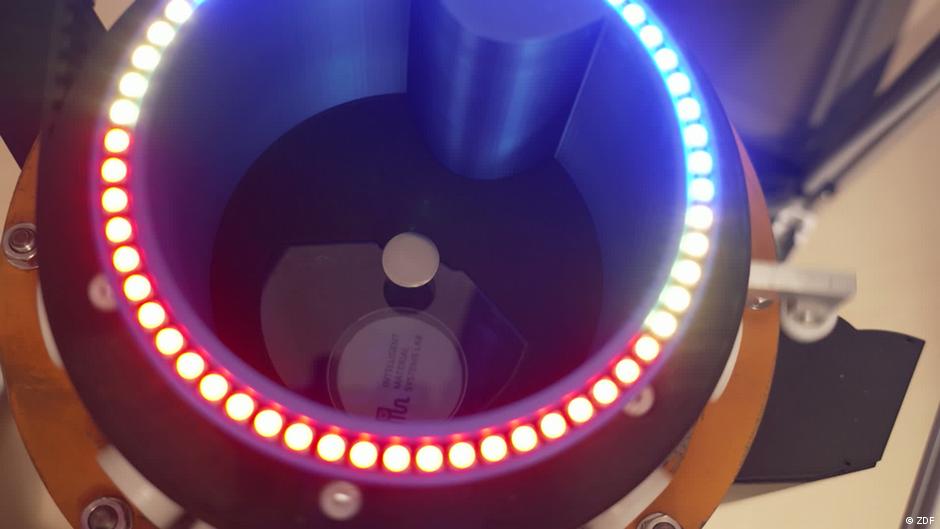
A new technology (developed in Germany and Europe) uses shape-memory metals that heat up when stretched and cool down when released. This cooling effect would make refrigerators and air conditioners much more efficient.
You must log in or # to comment.
I bet that RGB LED ring adds another 10% performance. Just like with gaming hardware.
I think I’ve seen demos on YouTube of rubber bands being used like this for cooling. Obviously not a lot, just enough for demonstration of the physical phenomenon. Would be interesting if it actually works effectively.
I have doubts that it’s significantly (or at all) more efficient than current refrigeration solutions. Seems like they’re emphasizing that it’s leak-proof, since it doesn’t use a gas refrigerant. That’s certainly a notable benefit, but I don’t know how common leakage really is in fridges and ACs.
Either way, cool development. I’ll leave it to the scientists to work out the truth.
I don’t know how common leakage really is in fridges and ACs.
My gut feeling is that almost all of them will leak at least once during their service life, simply because that’s the failure that causes them to be replaced.
The exception might be automobile ACs, where the vehicle itself gets totaled or suffers some other failure before the AC has a chance to go. But even then, I don’t know how diligent junkyards are about recovering the refrigerant.
When it does happen, it can be VERY expensive to replace the refrigerant. When my evaporator died last year, I was happy that it was under warranty, which covered the $2000 part, but I was unhappy to learn that it DIDNT cover the $3500 of refrigerant that leaked out.
Very interesting method, but I couldn’t find any info on how this is more efficient than existing refrigerant cooling, which is worrying
I wonder if the claims are overblown or just poorly reported by DW? A company in Ireland is also working on this technology and has a system using shape memory alloys: https://www.cibsejournal.com/technical/taking-shape-shape-memory-alloys-in-air-conditioning/
They do not seem to be claiming it is more energy efficient, but rather that the technology has a much lower Global Warming Potential overall than currently used refrigerants.
It’s possible the DW reported study is missing a key component of this? I.e. it’s not just the solid state materials being used, but how they’re being used that makes the difference?
They do not seem to be claiming it is more energy efficient, but rather that the technology has a much lower Global Warming Potential overall than currently used refrigerants.
if they start being vague like that, i’d be cautious
Not really? No greenhouse gases evolved, potentially lower GWP
Finally some good news :D
Until Jevons Paradox kicks in again
“Germany and Europe”? 🤔
Lots of research at German research institutes is financed by the German state and by the European Union. German research institutes hire Germans and other Europeans. It’s just misleading to describe research done in Europe as only “French” or "German or whatever because it’s very European too.
this article is talking about the elektrocaloric effect, not to be confused with the thermoelektric effect.hmm, no, wait, this is yet another thing?