Ok. Is using AI compatible in the slightest with the very idea of Solarpunk?
I’d say no - either 80% of commenters here are migrants from other communities or you should really rethink your life.
(Really, defending AI power usage!? It’s a waste regardless if it uses 2 million tokens or 1)
Some forms probably. A lot of earth observation produces better approximations using the same statistical techniques that LLMs use for producing language.
The fundamental reason I don’t expect LLMs to go away is that they wildly increase software engineers productivity. It’s a lot more cost effective to give an engineer an LLM than it is to give them a team subordinates.
I do not think “compatible with solarpunk?” has a binary answer. The present AI arms race is plainly hard to square with solarpunk: opaque infrastructure, speculative scale, and communities asked to absorb its water and energy costs.
But a tool is not redeemed or condemned by its label. A use should have to meet a high bar: transparent footprint, a bounded budget, a locally meaningful benefit, and evidence that it prevents more harm than a lower-compute alternative. Earth observation and climate modelling may sometimes meet that bar. Generating disposable content probably does not.
Solarpunk’s role could be to make those conditions non-negotiable.


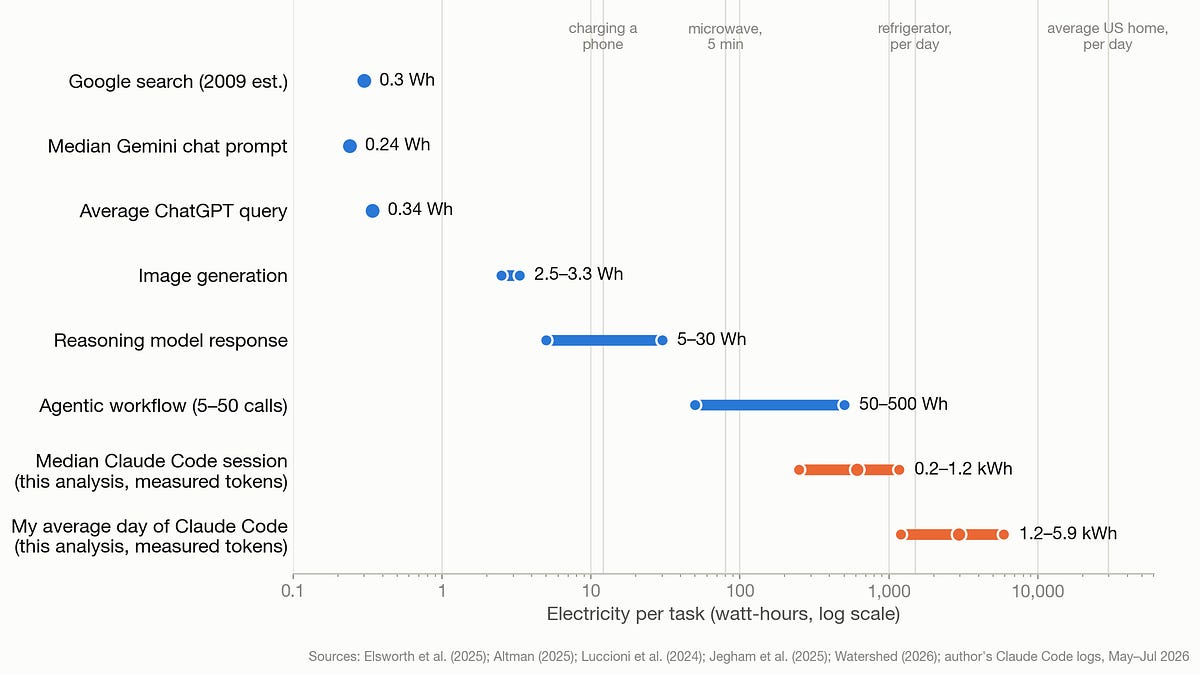
Ok. Is using AI compatible in the slightest with the very idea of Solarpunk? I’d say no - either 80% of commenters here are migrants from other communities or you should really rethink your life. (Really, defending AI power usage!? It’s a waste regardless if it uses 2 million tokens or 1)
Some forms probably. A lot of earth observation produces better approximations using the same statistical techniques that LLMs use for producing language.
The fundamental reason I don’t expect LLMs to go away is that they wildly increase software engineers productivity. It’s a lot more cost effective to give an engineer an LLM than it is to give them a team subordinates.
I do not think “compatible with solarpunk?” has a binary answer. The present AI arms race is plainly hard to square with solarpunk: opaque infrastructure, speculative scale, and communities asked to absorb its water and energy costs.
But a tool is not redeemed or condemned by its label. A use should have to meet a high bar: transparent footprint, a bounded budget, a locally meaningful benefit, and evidence that it prevents more harm than a lower-compute alternative. Earth observation and climate modelling may sometimes meet that bar. Generating disposable content probably does not.
Solarpunk’s role could be to make those conditions non-negotiable.