Synopsis: Australia says it has delivered the final tranche of 49 retired M1A1 Abrams tanks to Ukraine as part of a broader $1.5 billion support package. -The tanks arrive with spares and support gear and are described as modified for Ukrainian requirements, including diesel fuel compatibility and upgraded thermal sights and electronics. -On the battlefield, […]
For the one thousandth time,Main Battle Tanks are as far from obsolete as you possibly can get.
Based on how the Kremlin’s tanks fared – and how the Western-made MBTs like the Leopard 2 and Challenger 2 failed to be the miracle weapons Kyiv hoped for – it would seem that the Marine Corps made the right move. In a future war, they’ll be able to say they lost no tanks, simply because they had none to lose!
The Marine Corp is optimized for storming beaches and opening theaters for heavy firepower, Main Battle Tanks come way after that especially in the Pacific theater. By the time main battle tanks come into the picture the function of the Marines will be needed elsewhere.
It isn’t anti-tank-rifles, land-mines, bazookas, or RPG’s that render tanks obsolete: it is Saint Javelin that does.
When a troop-portable missile can take out a tank costing 100x as much, then by deploying tanks you are GIVING the enemy a way to bankrupt you.
A tank and an antitank missile are different tools with different jobs, an effective antitank missile changes how tanks are used, it has nothing to do with replacing them.
Armor is for moving troops around while protected, drones/guided missiles make that function MORE valuable to a military not less.
The cost analysis of AT weapons vs tanks completely misses the point of tanks, it is like hyperfocusing on a drill bit on a mining rig and being like “look how obsolete drill bits are they ALWAYS break and they are so expensive compared to the rest of the drill rig”.
Main battle tanks are the spear point of armored maneuever, they come into play at the most intense concentrations of force, just seeing them through the lens of cost misses almost the entire essential dynamic going on here.
When you kick a door down you aren’t generally concerned with the wasting calories, your goal is to decisively smash a breach open through defenses so the next step in a plan can happen AS FAST as possible.
While advanced anti-tank guided missiles (ATGMs) like the Javelin remain highly effective, the FPV drone has emerged as the primary and most frequently used anti-tank weapon of the war, largely due to its cost and availability. FPV operators have become adept tank hunters, exploiting the vulnerabilities of even the most modern main battle tanks. Tactics often involve targeting specific weak points such as the optics, the turret ring, the engine compartment, or the tracks.
A single FPV strike, especially with a standard RPG warhead, may not always result in a “catastrophic kill” that destroys the tank outright. However, it is often sufficient to achieve a “mobility kill” by damaging the tracks or engine, leaving the heavily armoured vehicle stranded and vulnerable. Once a tank is disabled, it can be systematically destroyed by subsequent FPV strikes or targeted by other assets like artillery or grenade-dropping drones that can precisely drop munitions into open hatches. Analysis of combat footage suggests that destroying a tank can sometimes require ten or more FPV drones, but given their low cost, this is still a highly favourable exchange. The effectiveness rate varies widely based on operator skill, target defences, and electronic warfare conditions, with estimates for successful strikes against armoured vehicles ranging from as low as 5% to as high as 50% for elite units. Regardless of the precise percentage, the sheer volume of attacks has made FPVs the leading cause of armoured vehicle losses for both sides"
further down:
"The Attrition Engine and the Death of Manoeuvre
The most significant strategic impact of the FPV drone, in concert with other ISR assets, has been the creation of a hyper-lethal and transparent battlespace that has effectively killed large-scale manoeuvre warfare. The constant threat of detection and precision strike from above makes the concentration of forces, the very foundation of a combined arms breakthrough, prohibitively costly and risky. As a result, both Russian and Ukrainian armies have been deprived of their tactical and operational mobility, forcing combat to devolve into a grinding, positional war of attrition reminiscent of World War I, but with 21st-century technology."
It’s RIGHT THERE: CONCENTRATION-OF-FORCE isn’t the way it’s done, now.


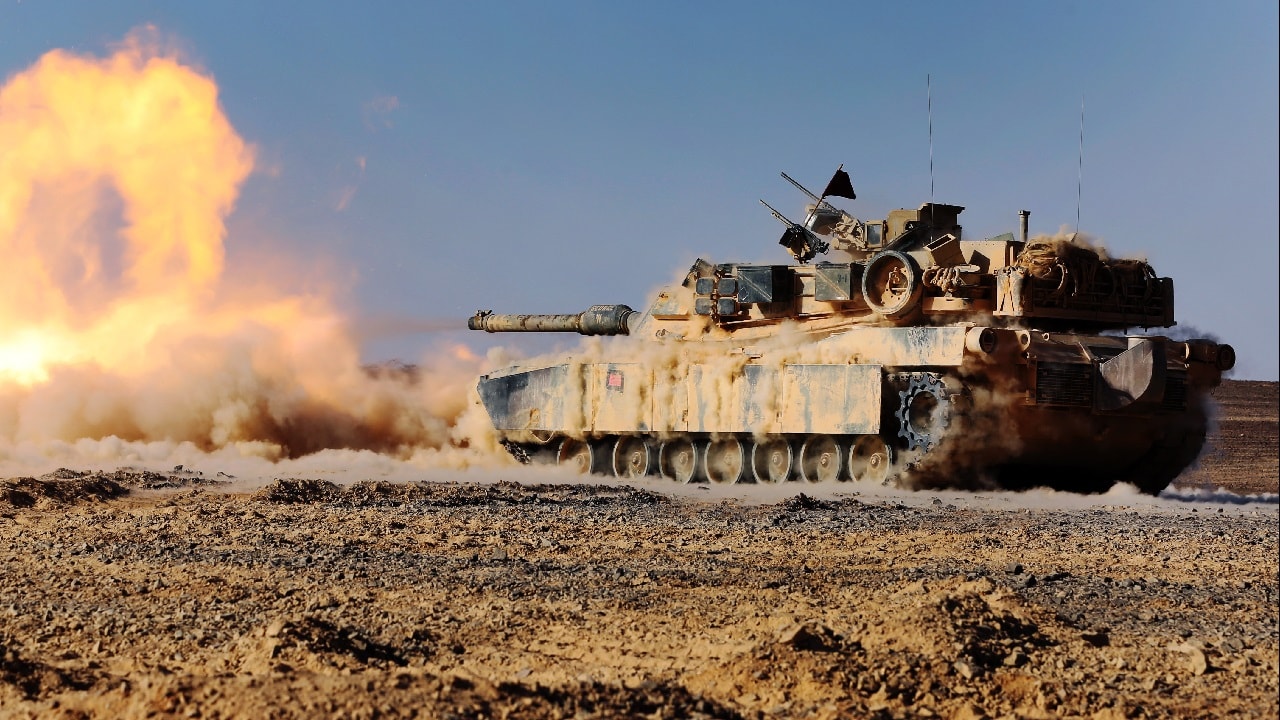
The Marine Corp is optimized for storming beaches and opening theaters for heavy firepower, Main Battle Tanks come way after that especially in the Pacific theater. By the time main battle tanks come into the picture the function of the Marines will be needed elsewhere.
A tank and an antitank missile are different tools with different jobs, an effective antitank missile changes how tanks are used, it has nothing to do with replacing them.
Armor is for moving troops around while protected, drones/guided missiles make that function MORE valuable to a military not less.
The cost analysis of AT weapons vs tanks completely misses the point of tanks, it is like hyperfocusing on a drill bit on a mining rig and being like “look how obsolete drill bits are they ALWAYS break and they are so expensive compared to the rest of the drill rig”.
Main battle tanks are the spear point of armored maneuever, they come into play at the most intense concentrations of force, just seeing them through the lens of cost misses almost the entire essential dynamic going on here.
When you kick a door down you aren’t generally concerned with the wasting calories, your goal is to decisively smash a breach open through defenses so the next step in a plan can happen AS FAST as possible.
My point is that concentration-of-force ITSELF isn’t happening, anymore, because drones have made that suicidal.
& when concentration-of-force isn’t happening, anymore, then … weapons which multiply 1 side’s advantage in concentration-of-force … are irrelevant.
Tanks are strong weapons.
But … why am I getting deja-vu about this… what similar-thing happened back in WW1 or WW2…
here’s 1, but of a different context, entirely:
Vietnam: ditch the 7.62 NATO round in favor of the 5.56, which IN JUNGLE is more-useful.
OK, so what happens when the army gets deployed in Iraq, in open desert, & there’s no jungle?
then one gets killed, helplessly, by the farther-reaching rounds being used by the enemy.
THE CONTEXT CHANGED, see?
.: the technological-appropriateness changed, too!
https://www.defenceukraine.com/en/insights/fpv-drones-ukraine-war-analysis/
"The Primary Anti-Tank Weapon
While advanced anti-tank guided missiles (ATGMs) like the Javelin remain highly effective, the FPV drone has emerged as the primary and most frequently used anti-tank weapon of the war, largely due to its cost and availability. FPV operators have become adept tank hunters, exploiting the vulnerabilities of even the most modern main battle tanks. Tactics often involve targeting specific weak points such as the optics, the turret ring, the engine compartment, or the tracks.
A single FPV strike, especially with a standard RPG warhead, may not always result in a “catastrophic kill” that destroys the tank outright. However, it is often sufficient to achieve a “mobility kill” by damaging the tracks or engine, leaving the heavily armoured vehicle stranded and vulnerable. Once a tank is disabled, it can be systematically destroyed by subsequent FPV strikes or targeted by other assets like artillery or grenade-dropping drones that can precisely drop munitions into open hatches. Analysis of combat footage suggests that destroying a tank can sometimes require ten or more FPV drones, but given their low cost, this is still a highly favourable exchange. The effectiveness rate varies widely based on operator skill, target defences, and electronic warfare conditions, with estimates for successful strikes against armoured vehicles ranging from as low as 5% to as high as 50% for elite units. Regardless of the precise percentage, the sheer volume of attacks has made FPVs the leading cause of armoured vehicle losses for both sides"
further down:
"The Attrition Engine and the Death of Manoeuvre
The most significant strategic impact of the FPV drone, in concert with other ISR assets, has been the creation of a hyper-lethal and transparent battlespace that has effectively killed large-scale manoeuvre warfare. The constant threat of detection and precision strike from above makes the concentration of forces, the very foundation of a combined arms breakthrough, prohibitively costly and risky. As a result, both Russian and Ukrainian armies have been deprived of their tactical and operational mobility, forcing combat to devolve into a grinding, positional war of attrition reminiscent of World War I, but with 21st-century technology."
It’s RIGHT THERE: CONCENTRATION-OF-FORCE isn’t the way it’s done, now.
_ /\ _