

- cross-posted to:
- europe@lemmy.dbzer0.com
…
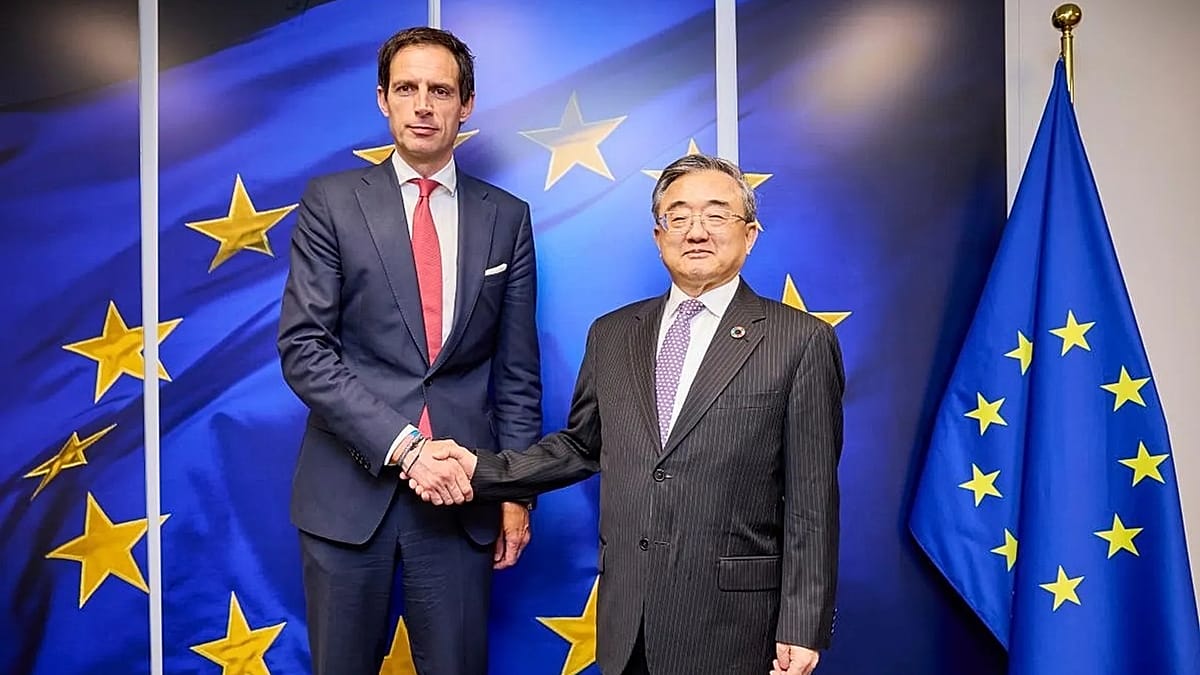
Europe must accept higher short-term costs to reduce its dependence on China for clean-energy technologies, EU Climate Action Commissioner Wopke Hoekstra has told Euronews, warning that delaying action will make the strategic vulnerability harder and more expensive to unwind.
The EU should have confronted its reliance on China “five to ten years ago”, Hoekstra said, arguing that waiting longer would bring greater disruption and costs.
“But it will be much cheaper and much more to our advantage to do it now than be wishy washy and wait another five to 10 years,” the Dutch Commissioner said.
…
“This will stay with us for years to come, because the dependencies in many domains have simply become too large,” he said, describing the situation as a “dangerous and uncomfortable” vulnerability for both Europe’s climate ambitions and economic security.
…
Tensions [between the EU and China] have intensified as Brussels has taken measures to protect the European market, targeting Chinese companies over issues including illegal products, state subsidies and foreign investment. Beijing has threatened retaliation.
Hoekstra pointed to Europe’s solar industry as a warning of what can happen when domestic production loses out to heavily subsidised Chinese imports.
But the Commissioner went further, raising concerns about alleged Chinese interference and security risks involving critical infrastructure in Europe.
“Kill switches are being included in windmills. Espionage happens at a very high degree on European soil. Intellectual property theft in our most advanced companies happens on a weekly basis and on and on and on — that is something no government and the EU can simply allow,” he said.
…
The goal is … to ensure that Europe is no longer vulnerable to a single external supplier for technologies critical to its energy transition.
The challenge, Hoekstra said, is to build European capacity now — even if doing so comes with higher costs in the short term.
…
I agree, but
Colonialism ended after WW2, with the help of the US who didn’t want other empires next to itself.
Slavery ended earlier.
Colonialism did not end after WW2. Especially the Soviet Union had a very large colonial empire. Partly inheriting the old Russian one, but the satellite states in the Warsaw Pact were basically protectorates. There are other examples like Indonesia in Papua or the weird quasi settler colonialism of Israel. Plenty of countries are currently trying to be more colonial masters. The US actions under Trump are fairly openly colonialist. Turkey is moving into northern Syria, Libya and Somalia for more influence in those parts of the world.
Oh and slavery is also still around. Not in the form of chattel slavery, although that is happening in Libya and Mauretania illegally as well, but in other form.
Portugal also retained their colonies in southern Africa well into the 1970ties.
True. I got carried away with the 100 years.
Though it looks like the dates matter little, since both are unfortunately still very much around.