It’s wild to me that someone heard this logic and said “makes sense”.
Like, I get it from an engineering perspective. You find out the maximum capacity of a bridge, account for extremes like multiple heavy loads, find the point of failure, and then engineer in a safety factor. Making sure your bridge can handle your theoretical maximum several times over.
But, we aren’t dealing with people seeing a strong bridge and thinking “nice, I can carry more stuff in my car” and encourage a larger capacity. The capacity they carry is already limited by their vehicle. They aren’t even thinking about the bridges capacity.
With road design. The road controls the capacity (speed) directly to the user of the road. There is a physical speed that if their car reaches they will crash. They interact with it directly.
Designing a road that increases that speed at which a guaranteed crash will happen is primarily just increasing the lethality of said crash. That’s the primary part of “safety” that the design guideline is controlling.
It’s saying. “Hey, if you go too fast for the road conditions, don’t worry. We made sure that the road was designed so that when you reach that speed you’ll have less time to react and more chance of dying”.
Also, “everyone speeds” is bull shit. Every speeds down a zero intersection straight road with a posted speed limit 15 MPH under what the road was designed for. It’s a fucking self fulfilling prophecy.
It’s saying. “Hey, if you go too fast for the road conditions, don’t worry. We made sure that the road was designed so that when you reach that speed you’ll have less time to react and more chance of dying”.
That’s not at all what’s being said. Knowing the speed people will want to drive with a specific design, doesn’t make it inherently “too fast”, its the exact opposite. The road designers are literally designing what the road condition will feel like to drivers, then taking the human factor into account to set a sensible limit instead of an arbitrary one.
If they know the road design will make people drive 50mph, and that most people drive 5mph over the posted limit, they post a 45mph limit. Driving at 50mph down that road is not “too fast”, that’s literally what was designed to feel correct.
There have been several studies over the years about posted versus real world speeds. Including studies of the same road with the posted speed being changed and monitoring driver behavior. They found that regardless of what the posted sign says, people usually drove about the same speed on that road. The minimum and maximum speeds varied with different signs as some people used that number directly, but the average of all traffic stayed the same regardless of the signage because that’s the speed that felt correct for that roadway. In some cases that was under the posted limit, in others that average was up to 10 over the posted limit.
Every speeds down a zero intersection straight road with a posted speed limit 15 MPH under what the road was designed for. It’s a fucking self fulfilling prophecy.
Most roads do not have posted speed limits that vary dramatically from the speed that feels right on that road, because they’re designed for a specific speed and posted with that consideration. Artificially low speed limits are not common. They’re usually from a speed being changed years after the road was designed and built, so it wasn’t intended to have drivers at that speed and also wasn’t physically changed to help reinforce that speed subconsciously, or from a town trying to boost ticket revenue.
That’s not at all what’s being said. Knowing the speed people will want to drive with a specific design, doesn’t make it inherently “too fast”, its the exact opposite.
You quoted and replied to my hyperbolic conclusion instead of the substance of what I was saying. Which is why I don’t really disagree, on the face of it, with anything you said.
The problem is not in individual roads or individual road designs. Though we often have to use the thought of an individual road to describe the problem. Which is what I was doing through analogy. The problem is that there is nothing put into the design to account for the impact on the way people drive based on the design parameters themselves.
It is a feedback loop that is not being taken into consideration by the design guidelines of American road infrastructure. The very basic “post the height of the bridge as 1 ft lower than it actually is” is being applied to speed limits and road design. When this type of thinking is far too simplistic for a much more complex system of human interaction with the road and other humans themselves.
The truck driver that drives a 10ft tall truck that fits under a bridge with a posted 9 ft 11in tall sign doesn’t think “hmmm I bet I could fit my 10ft 1in truck under here as well”.
But drivers do have these more complex thoughts and interactions with the road that they drive down every day.
My post was more a criticism of the use of speed limits in general. Which is why I was being hyperbolic. But I should have been more clear.
I am in favor of the design choice that "the driver should not even need to know the limit. They should be incentivized by the design to drive at a speed that is both safe for themselves, other drivers, and above all, pedestrians.


It’s wild to me that someone heard this logic and said “makes sense”.
Like, I get it from an engineering perspective. You find out the maximum capacity of a bridge, account for extremes like multiple heavy loads, find the point of failure, and then engineer in a safety factor. Making sure your bridge can handle your theoretical maximum several times over.
But, we aren’t dealing with people seeing a strong bridge and thinking “nice, I can carry more stuff in my car” and encourage a larger capacity. The capacity they carry is already limited by their vehicle. They aren’t even thinking about the bridges capacity.
With road design. The road controls the capacity (speed) directly to the user of the road. There is a physical speed that if their car reaches they will crash. They interact with it directly.
Designing a road that increases that speed at which a guaranteed crash will happen is primarily just increasing the lethality of said crash. That’s the primary part of “safety” that the design guideline is controlling.
It’s saying. “Hey, if you go too fast for the road conditions, don’t worry. We made sure that the road was designed so that when you reach that speed you’ll have less time to react and more chance of dying”.
Also, “everyone speeds” is bull shit. Every speeds down a zero intersection straight road with a posted speed limit 15 MPH under what the road was designed for. It’s a fucking self fulfilling prophecy.
That’s not at all what’s being said. Knowing the speed people will want to drive with a specific design, doesn’t make it inherently “too fast”, its the exact opposite. The road designers are literally designing what the road condition will feel like to drivers, then taking the human factor into account to set a sensible limit instead of an arbitrary one.
If they know the road design will make people drive 50mph, and that most people drive 5mph over the posted limit, they post a 45mph limit. Driving at 50mph down that road is not “too fast”, that’s literally what was designed to feel correct.
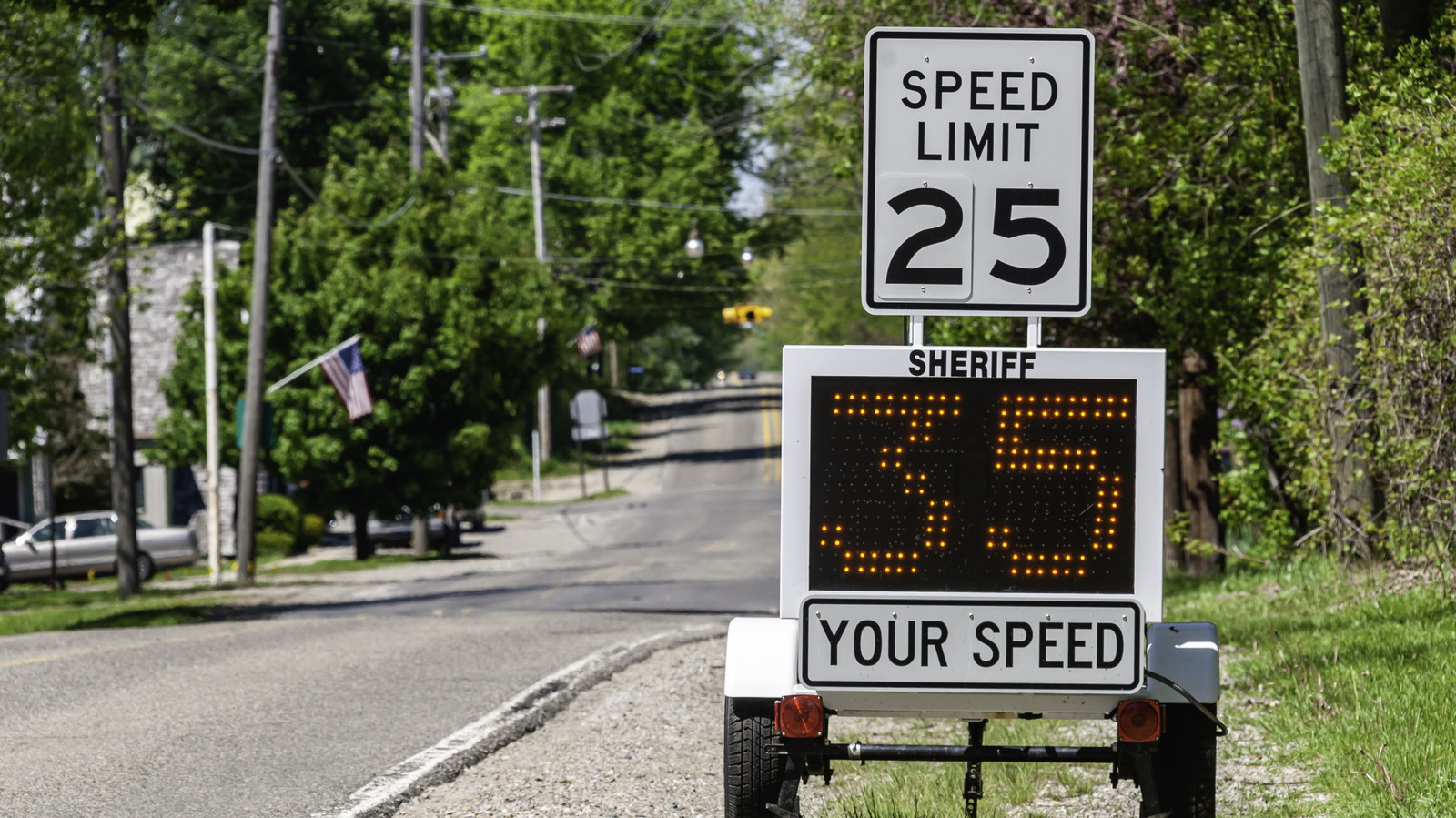
There have been several studies over the years about posted versus real world speeds. Including studies of the same road with the posted speed being changed and monitoring driver behavior. They found that regardless of what the posted sign says, people usually drove about the same speed on that road. The minimum and maximum speeds varied with different signs as some people used that number directly, but the average of all traffic stayed the same regardless of the signage because that’s the speed that felt correct for that roadway. In some cases that was under the posted limit, in others that average was up to 10 over the posted limit.
Most roads do not have posted speed limits that vary dramatically from the speed that feels right on that road, because they’re designed for a specific speed and posted with that consideration. Artificially low speed limits are not common. They’re usually from a speed being changed years after the road was designed and built, so it wasn’t intended to have drivers at that speed and also wasn’t physically changed to help reinforce that speed subconsciously, or from a town trying to boost ticket revenue.
You quoted and replied to my hyperbolic conclusion instead of the substance of what I was saying. Which is why I don’t really disagree, on the face of it, with anything you said.
The problem is not in individual roads or individual road designs. Though we often have to use the thought of an individual road to describe the problem. Which is what I was doing through analogy. The problem is that there is nothing put into the design to account for the impact on the way people drive based on the design parameters themselves.
It is a feedback loop that is not being taken into consideration by the design guidelines of American road infrastructure. The very basic “post the height of the bridge as 1 ft lower than it actually is” is being applied to speed limits and road design. When this type of thinking is far too simplistic for a much more complex system of human interaction with the road and other humans themselves.
The truck driver that drives a 10ft tall truck that fits under a bridge with a posted 9 ft 11in tall sign doesn’t think “hmmm I bet I could fit my 10ft 1in truck under here as well”.
But drivers do have these more complex thoughts and interactions with the road that they drive down every day.
My post was more a criticism of the use of speed limits in general. Which is why I was being hyperbolic. But I should have been more clear.
I am in favor of the design choice that "the driver should not even need to know the limit. They should be incentivized by the design to drive at a speed that is both safe for themselves, other drivers, and above all, pedestrians.