

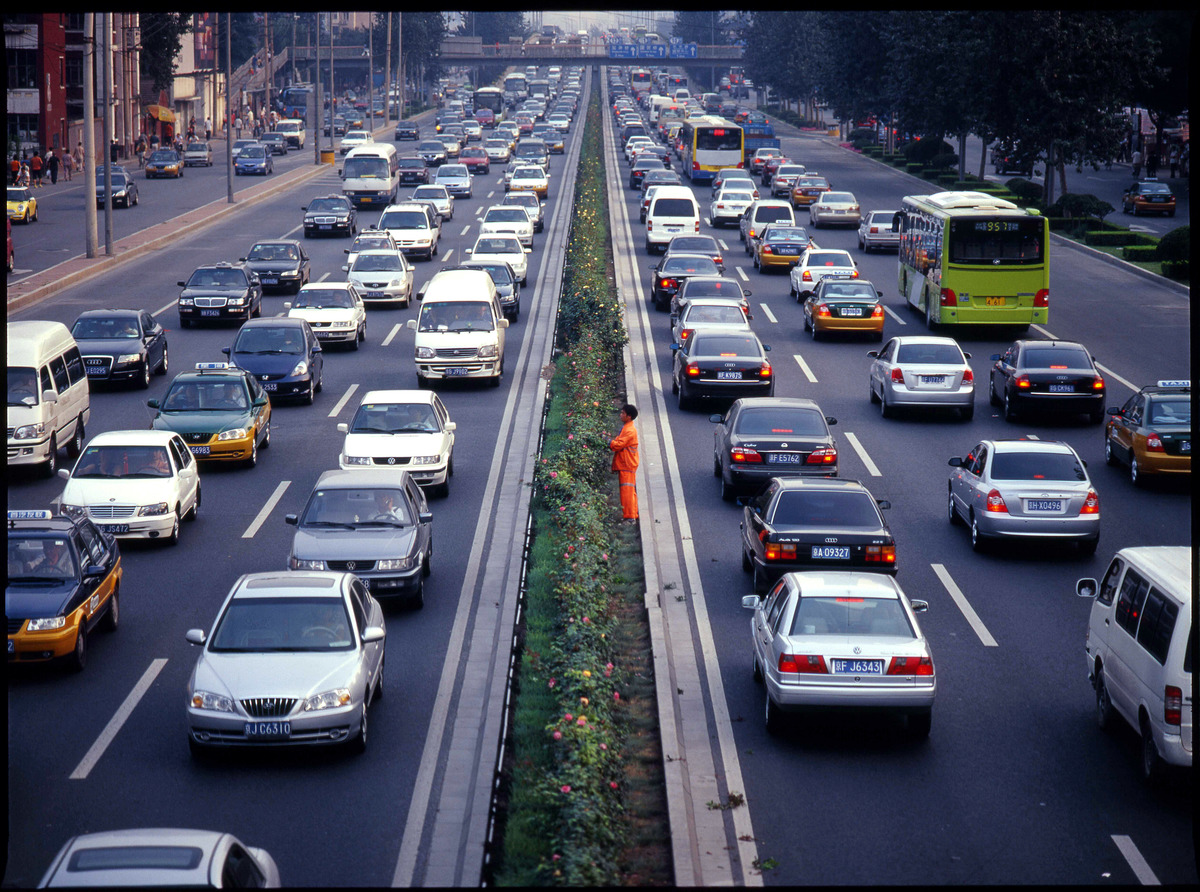
Though progress is often slow, city planners and politicians are gradually waking up to the fact that when cities offer safe and affordable alternatives to cars, we start to travel differently.
More and more young people are choosing bicycles, buses and trains over owning a car out of the sheer cost. In Berlin, it’s public transport, not cars, which is the coolest way of getting around.
In Copenhagen, a city that has a long held reputation for being bike-friendly, a whopping 62% of people choose to cycle their commute.
In the French city of Lyon, the number of cars entering the city has fallen by 20% compared to just a decade ago. As the city’s network of bike hire stations continues to grow, town planners are hoping for a further 20% decline.
In London, where cycle super-highways are becoming popular, the share of journeys made by car has fallen by a quarter since 1990.
Car free days are rising in popularity in many of the world’s largest cities, giving people a taste of what it’s like to live with less noise, traffic and pollution. Bogota was one of the first cities to introduce a car free day, and it’s now become so popular that it’s been extended to a full week.
Bogotá’s Ciclovía is fantastic! I was there in the mid-nineties and they closed a major artery, the Carretera Séptima, on Sundays. Here some pictures.
Actually, I am in Africa, so I am very aware of the situation. Outside of cities and Major towns, people are often trapped with little access to transport. They can only afford to travel to local towns, once or twice a month to access services like healthcare and professional services. For goods they usually have to coordinate as a community to get a goods truck to bring them items.
The problem with rural areas is that the tax base is too low to warrant the cost of infrastructure investment. Its cheaper for those people to move to larger towns and cities. In the “old world” they at least have the advantage of dense and walkable towns.
The US as the problem that their small towns are build car centric, and subsidized by taxes from urban tax payers. They will need reabilitate their towns to build over the top of roads and radically rework their power, electricity and sewage infrastructure.