

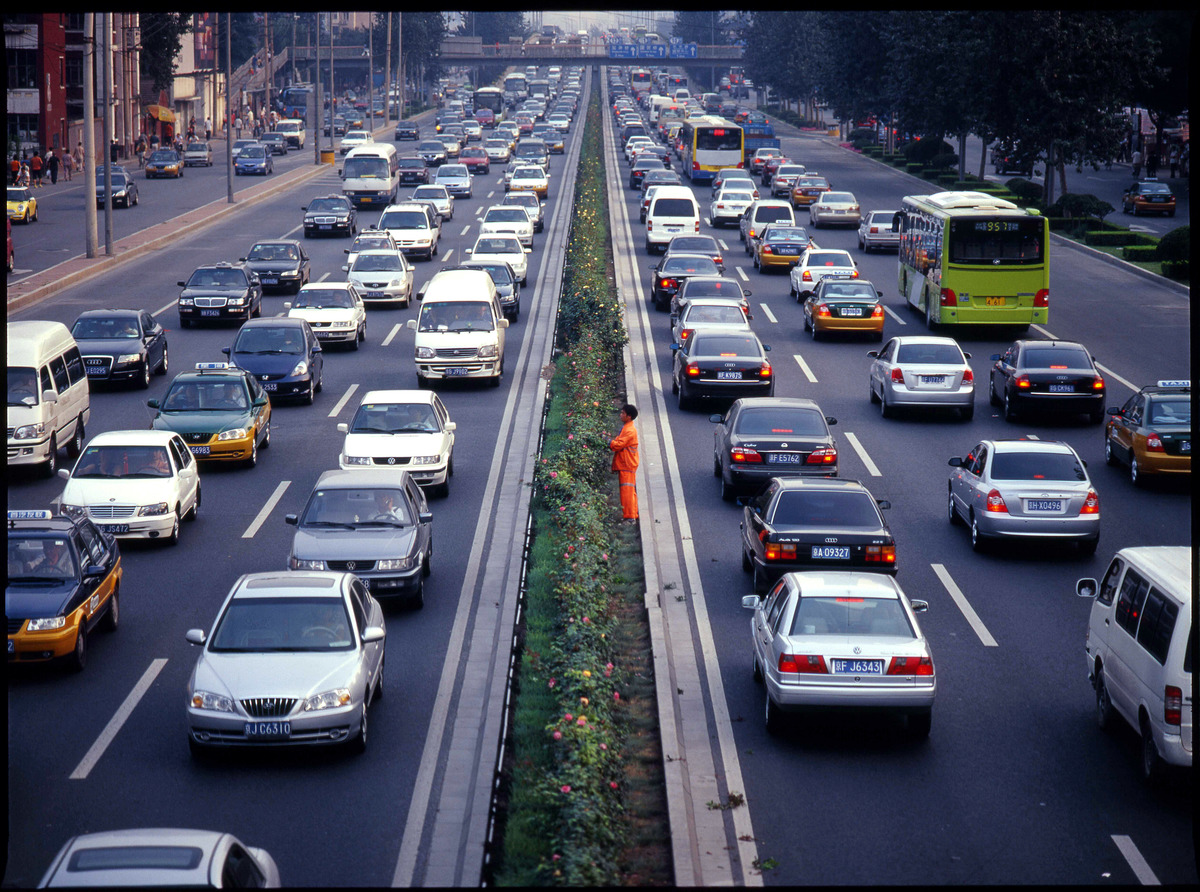
Though progress is often slow, city planners and politicians are gradually waking up to the fact that when cities offer safe and affordable alternatives to cars, we start to travel differently.
More and more young people are choosing bicycles, buses and trains over owning a car out of the sheer cost. In Berlin, it’s public transport, not cars, which is the coolest way of getting around.
In Copenhagen, a city that has a long held reputation for being bike-friendly, a whopping 62% of people choose to cycle their commute.
In the French city of Lyon, the number of cars entering the city has fallen by 20% compared to just a decade ago. As the city’s network of bike hire stations continues to grow, town planners are hoping for a further 20% decline.
In London, where cycle super-highways are becoming popular, the share of journeys made by car has fallen by a quarter since 1990.
Car free days are rising in popularity in many of the world’s largest cities, giving people a taste of what it’s like to live with less noise, traffic and pollution. Bogota was one of the first cities to introduce a car free day, and it’s now become so popular that it’s been extended to a full week.
Bogotá’s Ciclovía is fantastic! I was there in the mid-nineties and they closed a major artery, the Carretera Séptima, on Sundays. Here some pictures.
I hate this sentiment so much, because it implies that everyone can just wait for change: “Just go buy another gas powered car until that rail road line is built”.
If you can afford an electric car (instead of your current gas powered car) today please buy one or you are part of the problem. If you don‘t need it anymore, because of that rail road line, sell it. Electric cars are much better for the climate & the surroundings. They can also be important for electric grid stability.
Additionally since Copenhagen was mentioned: In the last ten years car ownership in Copenhagen actually increased (https://kk.statistikbank.dk/statbank5a/SelectVarVal/saveselections.asp). Just because people take the bike every day doesn‘t mean that they don‘t own a car.
PS: I live in the city center and don‘t own a car. Never have.
Pretty sure that Greenpeace does not want people to wait for change - they push for it
Also: “Don’t let perfect be the enemy of good [enough].”
Societal Progress is an exercise in iterative steps. Electric cars today, something even better tomorrow (and by tomorrow I mean in fifty to a hundred years because lord knows people refuse to fund mass transit in some countries).
Look if you give me the money I’ll build a whole fleet of dirigibles. Those are mass transit.
Did you miss the word “just” in the title?
I know that some people will miss it and act accordingly. The car industry in Europe build up more electric car production capacity than people were willing to buy. The industry transformed faster than society. They are now correcting their plans which is so sad to see. I know that for some an electric car is just unaffordable, but for many others it is just too inconvenient, unreasonably priced or they wait for hydrogen cars (I had these discussions a lot). Climate change is what is inconvenient. There is no time too waste.
Well… I’m sure there would be ways to make electric cars more affordable.
Either by government policy or by company policy. You could for example shift the extra cost of your EVs to the ICE cars. There is no law that mandates how your cars need to be priced. You could literally swap prices of ICE cars vs EVs.
Since ICE cars are bought more you could probably raise their price only a bit, but drop EV prices massively until it evens out or shifts.