

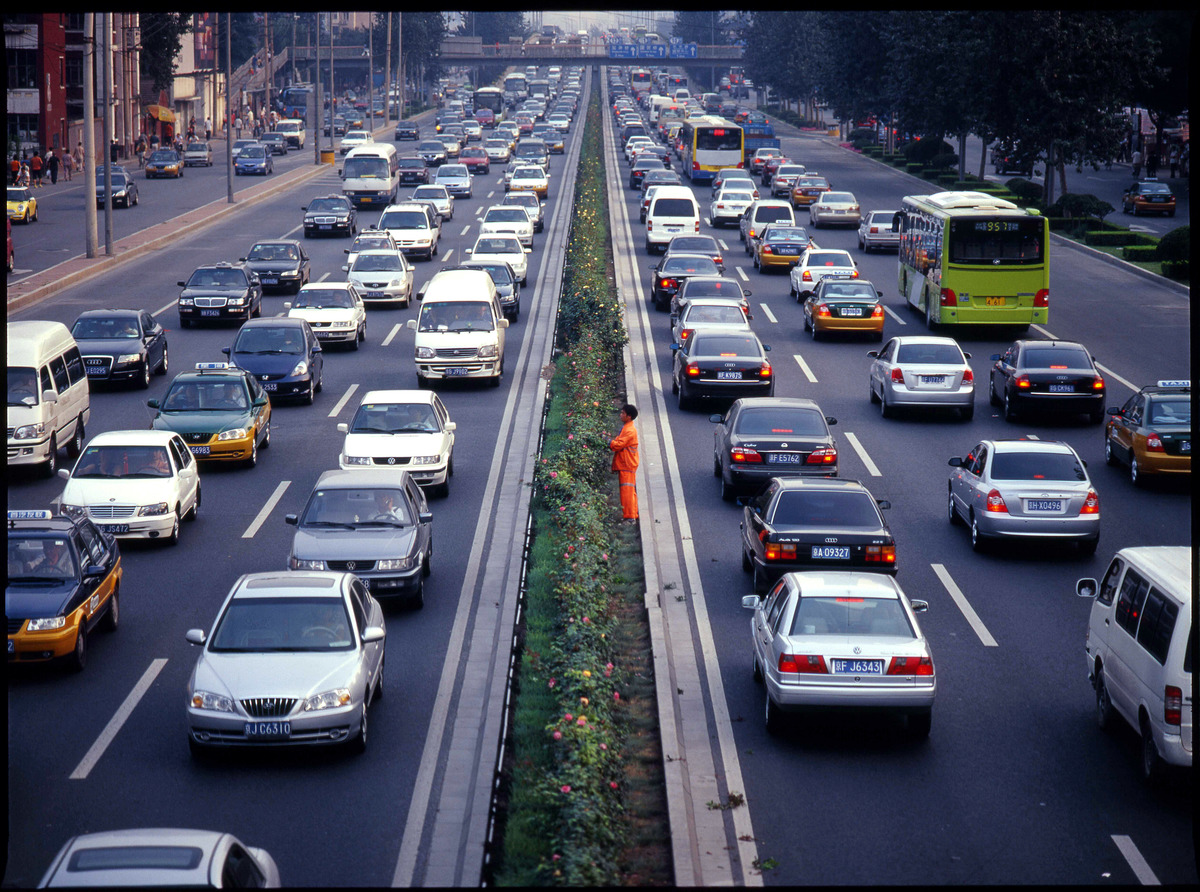
Though progress is often slow, city planners and politicians are gradually waking up to the fact that when cities offer safe and affordable alternatives to cars, we start to travel differently.
More and more young people are choosing bicycles, buses and trains over owning a car out of the sheer cost. In Berlin, it’s public transport, not cars, which is the coolest way of getting around.
In Copenhagen, a city that has a long held reputation for being bike-friendly, a whopping 62% of people choose to cycle their commute.
In the French city of Lyon, the number of cars entering the city has fallen by 20% compared to just a decade ago. As the city’s network of bike hire stations continues to grow, town planners are hoping for a further 20% decline.
In London, where cycle super-highways are becoming popular, the share of journeys made by car has fallen by a quarter since 1990.
Car free days are rising in popularity in many of the world’s largest cities, giving people a taste of what it’s like to live with less noise, traffic and pollution. Bogota was one of the first cities to introduce a car free day, and it’s now become so popular that it’s been extended to a full week.
Bogotá’s Ciclovía is fantastic! I was there in the mid-nineties and they closed a major artery, the Carretera Séptima, on Sundays. Here some pictures.
I did that too when I lived in Copenhagen. And it’s also the fastest way to get around.
But now I live in the countryside, and here we absolutely need cars, but everyone on my road drive electric, and half of us have solar panels. So in that way I don’t think our environmental footprint is worse than living in an apartment in the city. Because we to a large degree are energy self sustained.
The problems of car dependency go beyond carbon, though - it’s also about road danger, space demand, micro plastics, the exclusion from society of people who can’t afford cars, the exclusion of disabled people, etc etc. Changing the engine doesn’t address these and we need to work towards reducing reliance on this form of transport
IMO the best way to get rid of cars (in your own life) is to not live on the countryside.
Not everyone can afford a place in a large city.
They could if they weren’t paying for a car note, excise tax, parking, gasoline, repairs, and maintenance…
Likely have a shorter commute to work (since no traffic), too, and thus a better work/life balance.
But…you likely lose out on recreational perks of suburban and rural life, like gardening, since you have very limited space for it. On the flipside, though, there are usually more recreational options and “third places” readily available.
The cost of having a car is much less than the cost of renting an apartment in a large city. And you usually don’t need to pay for parking in rural areas, everyone has a driveway or a garage, and many places have free parking.
Don’t forget some people must have new vehicles (and can’t be trusted to maintain the vehicles themselves) so they lease a new car every three years
The barrier to entry is prohibitive. So many people are living paycheck to paycheck, a down payment on a home within walking/cycling distance of their workplace is a pipedream.
Even if they could, with how large cities are, it’s unlikely it’ll be close to where they work.
The solution is always mass transit: even a simple bus, as long as it’s comfortable, reasonably fast and timely will do wonders. Trains and subway, even better.
I found a nice house for sale that’s literally across the street from my new job. They only want 4.7 million for it.
Ten years ago it was worth 500k. Like what the fuck.
Mass transit doesn’t solve the problem of high rent prices, unfortunately.
By itself, no, it will not solve the problem, but it does help because it distributes the housing pressure over a larger area.
Forget the superhero approach. If you’re looking for one solution to fix everything, you’ll live life as a very disappointed person. There are no magical fixes to big problems - it’s one small step at a time, until their compounding effect starts to chip away at the problem.
Not to disagree, but better only have those problems and not have those problems and fossil fuel emissions. Working towards that goal is much more sensible in the places with high density populations.