
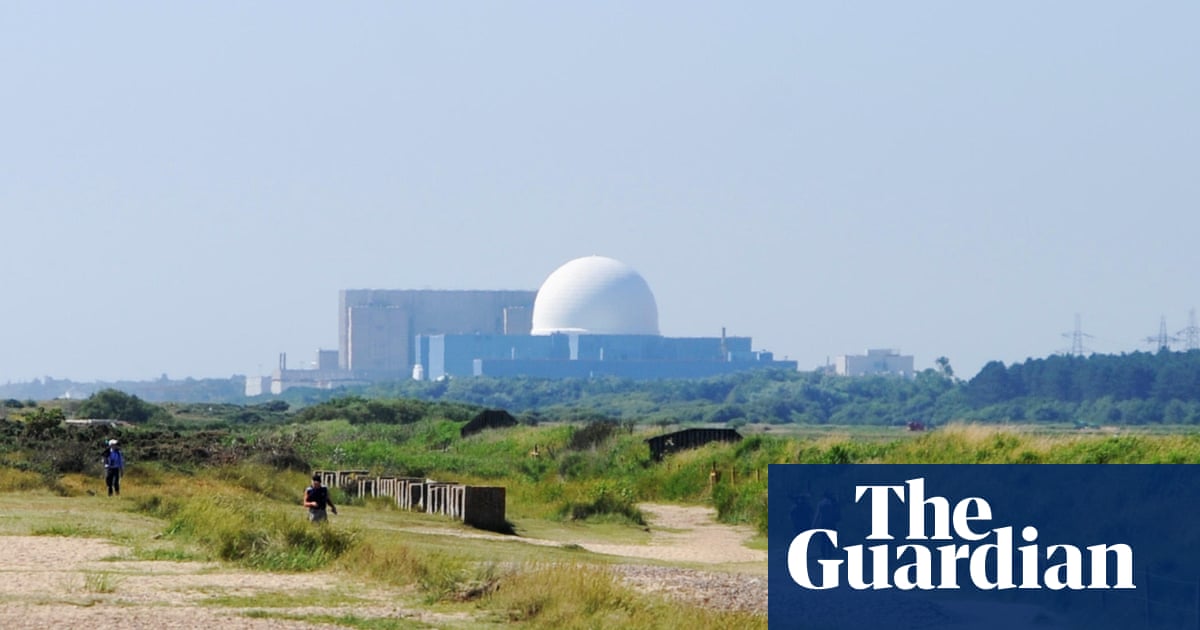
The motion, adopted at conference, removes a “blanket opposition to nuclear fission” and instead commits the Green party of England and Wales to assessing nuclear projects alongside other low-carbon technologies.
Its electricity generation policy still prioritises offshore wind, onshore wind and rooftop solar as the primary sources of electricity, but allows elected representatives to support new nuclear reactors on a case-by-case basis.
This was one or the few areas I didn’t align with the Green Party before, as I believe that a bit of nuclear is kind of necessary to help round out less consistent energy sources as things stand. I think this is a reasonable stance.
And how cheap are renewables when the wind doesn’t blow and the sun doesn’t shine?
Renewables and batteries are awesome and we need more. But they aren’t suited to all weather in all countries at all times. The UK has periods where there is not enough wind or sun or battery storage to sustain demand. Nuclear is not my first choice but it is a practical choice that can be helpful.
That’s why I included storage in my comment. Wind and solar are very predictable across a longer time frame.
Really? Can you provide a source for this?
https://en.wikipedia.org/wiki/Dunkelflaute
The wikipedia article itself has many sources, I won’t pretend I have read them. Pretty sure I first heard of this in a modo energy video, but I couldn’t find it. Regardless it is a well researched phenomenon and is a real challenge we need to overcome.
Technically you could do it with enough battery storage but those batteries would be doing nothing most of the time when the weather is normal.
It’s right there in the article, “To ensure power during such periods flexible energy sources may be used, energy may be imported, and demand may be adjusted.”
What do you think a flexible energy source is?
It also says:
To be clear, I am in favor of importing electricity across borders but if most of Europe is affected by Dunkelflaute then I don’t think it would be sufficient. Lets hope for the best and plan for the worst.
NG or hydrogen peaker plants, hydro, tidal, flywheels, etc.
That’s why this looks like a great idea:
https://en.wikipedia.org/wiki/Xlinks_Morocco–UK_Power_Project
Yep I agree that is a great idea. I’m sure something like that will be developed at some point.
Also the sheer amount of land and wildlife destruction they require to build solar fields and windfarms…
I don’t see that as a problem, you don’t have to put solar on a nature reserve you can put it on a roof, carpark, canal. You can even put it on grazing land and it can increase biodiversity.
Besides the actual surface needed for solar is relatively small, you could power the UK with about as much surface area as is currently used by golf courses.
Ah, fair point then.