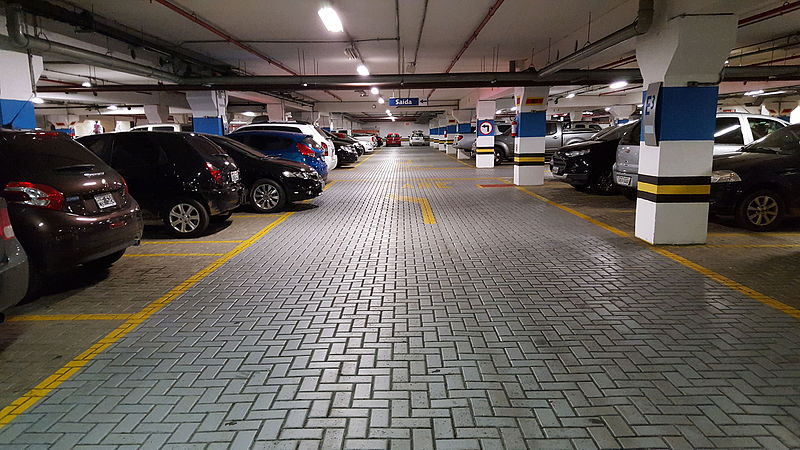
For new apartments, the research found that building required parking adds roughly $50,000 to $100,000 per unit, and disproportionately increases the cost to build smaller apartments
Editorialized title aside… the thing about parking is that in the US, we’re sparse and spread out and need cars in most places.
You want to eliminate cars? Build densely. Replace great swaths of our suburbs with medium to high density housing + commercial spaces where people don’t need cars to go shopping or eat at restaurants or grocery shop. Then you’re also dense enough to be able to support great public transportation. And then you can greatly reduce the number of cars.
It’d be great. I’d love to be able to walk[1] to shopping and restaurants. I’d love to take good public transportation to my doctor visits and elsewhere.
But that requites a radical re-thinking about how we live, and then a radical re-building.
I’d be all for it - the cost savings of not owning a vehicle would be fantastic, and while electric cars wll help, congestion and pollution are even less of a problem with a great public transportation network.
@daychilde@NomNom What about all the places that have density and public transit but hamstring themselves with parking mandates based on suburban trip generation assumptions? The more you mandate parking, the harder you make it to get around or do business. We have walkable urban neighborhoods that are food deserts and people want to open corner stores in old vacant buildings but are blocked because they don’t have space for off-street parking.
Cities today are orders of magnitude larger (population-wise) than cities in the early 1900s and this is largely due to plumbing and fire codesn Parking is like an afterthought in terms of city planning of any size, usually.
Parking in most US cities is insane because of lobbying and corruption by the car industry. The design challenges aren’t unique.
The problem in the US is not size or distance or density, none of those are in any way unique.
The #1 biggest difference between US and other countries is lobbying by car companies. In the US car companies have created not only a plethora of pseudoscientific parking laws but also import/export, safety, transit, and emission laws. None of which make any sense.
Take a look at aerial photos of cities in the US in the early 1900s vs the same cities today. In every single case, 50% or more of the land had buildings torn down to put in flat level parking lots. Population wise they are larger, but they are also way less dense than we used to build.
That’s exactly the point. Cities in the US have expanded despite insane and arbitrary parking requirements. The affordability crisis and the ‘strip-mall-ification’ of the US are something that are inexorably linked. We don’t build affordable housing anymore, we build parking lots and suburbs.
This fixation on suburbs and parking lots is a major factor in the affordability crisis we face


Editorialized title aside… the thing about parking is that in the US, we’re sparse and spread out and need cars in most places.
You want to eliminate cars? Build densely. Replace great swaths of our suburbs with medium to high density housing + commercial spaces where people don’t need cars to go shopping or eat at restaurants or grocery shop. Then you’re also dense enough to be able to support great public transportation. And then you can greatly reduce the number of cars.
It’d be great. I’d love to be able to walk[1] to shopping and restaurants. I’d love to take good public transportation to my doctor visits and elsewhere.
But that requites a radical re-thinking about how we live, and then a radical re-building.
I’d be all for it - the cost savings of not owning a vehicle would be fantastic, and while electric cars wll help, congestion and pollution are even less of a problem with a great public transportation network.
well, roll, as a wheelchair user ↩︎
@daychilde @NomNom What about all the places that have density and public transit but hamstring themselves with parking mandates based on suburban trip generation assumptions? The more you mandate parking, the harder you make it to get around or do business. We have walkable urban neighborhoods that are food deserts and people want to open corner stores in old vacant buildings but are blocked because they don’t have space for off-street parking.
Cities today are orders of magnitude larger (population-wise) than cities in the early 1900s and this is largely due to plumbing and fire codesn Parking is like an afterthought in terms of city planning of any size, usually.
Parking in most US cities is insane because of lobbying and corruption by the car industry. The design challenges aren’t unique.
The problem in the US is not size or distance or density, none of those are in any way unique.
The #1 biggest difference between US and other countries is lobbying by car companies. In the US car companies have created not only a plethora of pseudoscientific parking laws but also import/export, safety, transit, and emission laws. None of which make any sense.
Take a look at aerial photos of cities in the US in the early 1900s vs the same cities today. In every single case, 50% or more of the land had buildings torn down to put in flat level parking lots. Population wise they are larger, but they are also way less dense than we used to build.
That’s exactly the point. Cities in the US have expanded despite insane and arbitrary parking requirements. The affordability crisis and the ‘strip-mall-ification’ of the US are something that are inexorably linked. We don’t build affordable housing anymore, we build parking lots and suburbs.
This fixation on suburbs and parking lots is a major factor in the affordability crisis we face
I wonder what are between the buildings in these low-density cities? 🤔
The buildings are the low density and all the space between. That’s the problem.