That’s what I’m talking about! This needs to be everywhere. Funny though, my local utilities already has it marked on their agenda to “discuss” these types of solar setups. They say they “may not be safe to use.”
Actually the reality is that utility companies stand to lose money from tech like this. So hopefully my community and others can stand up for this tech.
If the solar panel don’t have grid failure shutdown for its inverter, it can shock (or with bad luck) kill workers working on a downed power line assuming the load side is safe. That is also why house installations also often only have a dedicated outlet during power loss and are not allowed to connect to the full house.
I agree everyone should be able to get off-grid solar system or balcony solar, but they should have to be certified to not shock workers during an outage when people inevitably get cheap TEMU balcony solar.
Another potential issue is the possibility of overloading a circuit if these are used incorrectly. Basically, having enough load on the same circuit as too many of these panels would cause over current that is not seen by the upstream breaker. That’s probably an unlikely circumstance but something to be aware of and to design controls to prevent.
Seems like the safest thing to do is to design products to fail safely even if the owner doesn’t follow the manual. Relying on the competence of end users alone is, in my opinion, not enough.
In the U.S., at least, diesel fuel dispenser nozzles don’t fit in a typical gasoline car. The engineers have intentionally designed standards to reduce human error.
That’s what should happen with any home electrical appliances, to reduce dangerous practices. It can’t be eliminated entirely, but things should be designed assuming that people don’t follow directions and don’t read the manual, have safety features that physically or electronically prevent power from going to the wrong place or in the wrong quantities.
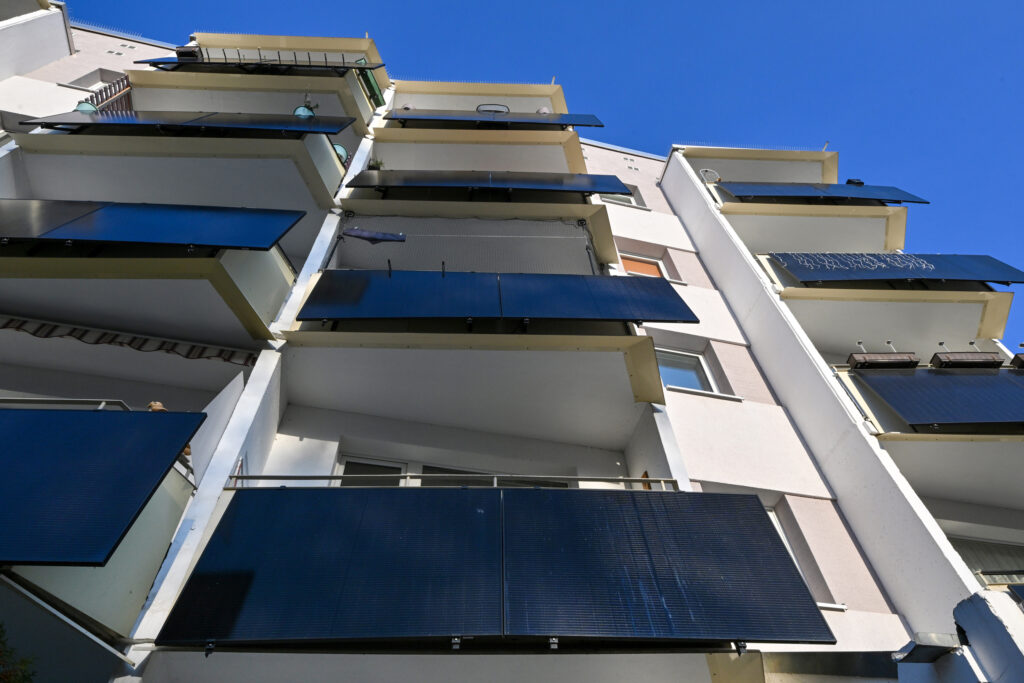
That’s what I’m talking about! This needs to be everywhere. Funny though, my local utilities already has it marked on their agenda to “discuss” these types of solar setups. They say they “may not be safe to use.”
Actually the reality is that utility companies stand to lose money from tech like this. So hopefully my community and others can stand up for this tech.
Well they are correct to a point.
If the solar panel don’t have grid failure shutdown for its inverter, it can shock (or with bad luck) kill workers working on a downed power line assuming the load side is safe. That is also why house installations also often only have a dedicated outlet during power loss and are not allowed to connect to the full house.
I agree everyone should be able to get off-grid solar system or balcony solar, but they should have to be certified to not shock workers during an outage when people inevitably get cheap TEMU balcony solar.
Another potential issue is the possibility of overloading a circuit if these are used incorrectly. Basically, having enough load on the same circuit as too many of these panels would cause over current that is not seen by the upstream breaker. That’s probably an unlikely circumstance but something to be aware of and to design controls to prevent.
They are typically reduced to 800W upstream. And you should plug only one into one current.
At the end it depends in the strength/ thickness of your power cable.
What happens when you plug in more than one? Is there some kind of safety circuitry that detects this and shuts it off?
I don’t think so.
Even the correct cable connection is essential - parallel or serial PV panels into the inverter.
If you do not read the fck manual, you should not play with power toys.
Seems like the safest thing to do is to design products to fail safely even if the owner doesn’t follow the manual. Relying on the competence of end users alone is, in my opinion, not enough.
Those systems are save. However, one can always crash it, if not used properly or fiddling around.
Same as you can refuel diesel in your petrol car. You can’t avoid dumb users entirely.
In the U.S., at least, diesel fuel dispenser nozzles don’t fit in a typical gasoline car. The engineers have intentionally designed standards to reduce human error.
That’s what should happen with any home electrical appliances, to reduce dangerous practices. It can’t be eliminated entirely, but things should be designed assuming that people don’t follow directions and don’t read the manual, have safety features that physically or electronically prevent power from going to the wrong place or in the wrong quantities.