“A more modest population – gently easing population to 4 billion by 2200 – would protect Earth’s natural heritage, including its wild habitats, wild species, and its climate. Such a world is within our grasp,” they concluded.
I think we could easily see the global population drop back to 4 billion well before 2200, but it almost certainly won’t be “gentle.” Wars, famine and disease, more likely.
For some context, the global population was about 4 billion in 1974-1975, so a little over 50 years ago. It’s very natural for a population crash to follow such a relatively sudden population explosion.
The Earth is finite. We do not have infinite resources so we can’t grow - in population, production or consumption - forever. We will hit the physical limits to growth eventually, and when we do there will likely be a sudden and dramatic collapse.
I’d actually argue that the Earth could sustain more people than we have now, and quite comfortably. The issue is the massive inequality in distribution of resources that is preventing it.
Agreed, though I feel like having fewer people would at least give the planet some extra cushion for natural human inefficiencies. (Though I’m open to being totally wrong on this. I’m not an expert.)
Though any talk of population management is obviously ripe for eugenics (hell it basically is eugenics), or problematicizing the working poor especially in areas most likely to produce climate refugees. When its the most wealthy countries that actually take more than their share (something about removing the plank from your own eye there…).
Increases in equity and access to birth control are enough on their own from what I’ve read, but you wouldn’t think it to hear the neo Malthusians eco fascists go on.
having fewer people would at least give the planet some extra cushion
Right, because the billionaires wouldn’t use that as an excuse to dump more wasteful externalities on the rest of us to use up that cushion and pad their profits.
Yeah then there’s that. In my head this is not a solution to any of our current problems, but like a hypothetical to when we’ve got our shit figured out (buried all the Bs).
Birthrates in developed nations have already plummeted with the introduction of the anti baby pill. We don’t need to hit any resource barriers for a population decline.
Birthrates in developed nations have already plummeted with the introduction of the anti baby pill. We don’t need to hit any resource barriers for a population decline.
The global population projections I’ve seen estimate the world’s population continuing to increase to about 10.3 billion by sometime in the 2080s, and then beginning a slow decline from there. I can’t say for sure where the limits to growth are, but I think we will reach them before then. Of course I could be wrong, but that’s what my gut tells me.
And a big reason for that isn’t just the growth in global population that is expected to continue for several more decades, but the imperative for economic growth, even in already very wealthy countries with advanced economies (and declining birthrates). When we do inevitability hit these physical resource barriers (and again I think that will happen before global population is projected to peak and begin declining), I think we will experience a significant global economic crisis that could plunge hundreds of millions, if not billions, back into extreme poverty, and that could cause average life expectancy to decline dramatically and infant mortality to increase. I think that could lead to a pretty significant and probably very sudden drop in global population, especially if it is accompanied by war and agricultural disruptions from climate impacts.

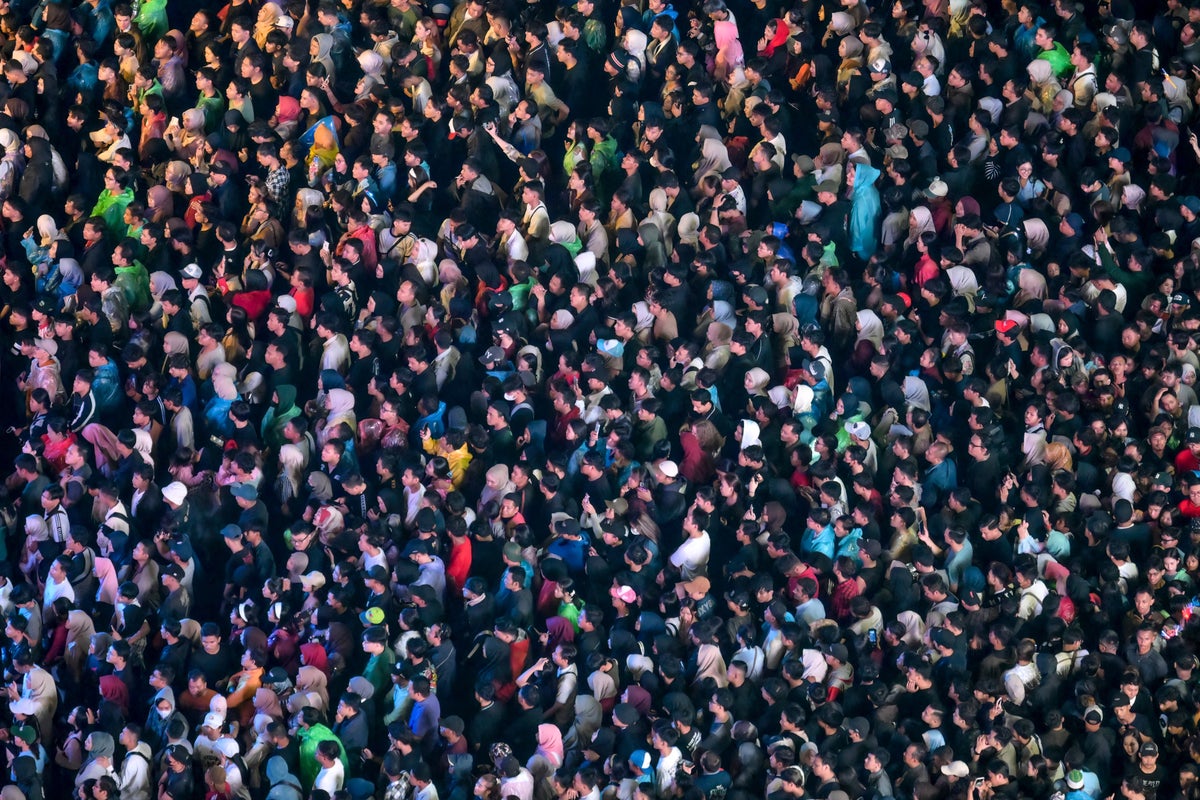
I think we could easily see the global population drop back to 4 billion well before 2200, but it almost certainly won’t be “gentle.” Wars, famine and disease, more likely.
For some context, the global population was about 4 billion in 1974-1975, so a little over 50 years ago. It’s very natural for a population crash to follow such a relatively sudden population explosion.
The Earth is finite. We do not have infinite resources so we can’t grow - in population, production or consumption - forever. We will hit the physical limits to growth eventually, and when we do there will likely be a sudden and dramatic collapse.
I’d actually argue that the Earth could sustain more people than we have now, and quite comfortably. The issue is the massive inequality in distribution of resources that is preventing it.
Reducing suburbs could also help a lot. Use the vertical space!
Agreed, though I feel like having fewer people would at least give the planet some extra cushion for natural human inefficiencies. (Though I’m open to being totally wrong on this. I’m not an expert.)
Though any talk of population management is obviously ripe for eugenics (hell it basically is eugenics), or problematicizing the working poor especially in areas most likely to produce climate refugees. When its the most wealthy countries that actually take more than their share (something about removing the plank from your own eye there…).
Increases in equity and access to birth control are enough on their own from what I’ve read, but you wouldn’t think it to hear the neo Malthusians eco fascists go on.
Right, because the billionaires wouldn’t use that as an excuse to dump more wasteful externalities on the rest of us to use up that cushion and pad their profits.
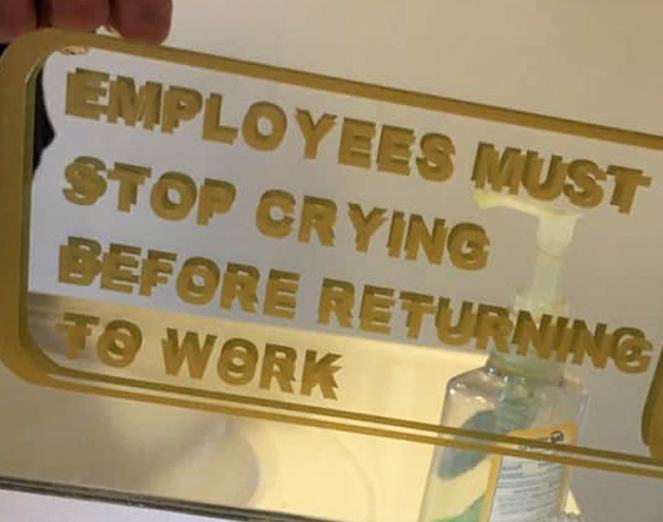
I read comments like this and all I hear is
Yeah then there’s that. In my head this is not a solution to any of our current problems, but like a hypothetical to when we’ve got our shit figured out (buried all the Bs).
Birthrates in developed nations have already plummeted with the introduction of the anti baby pill. We don’t need to hit any resource barriers for a population decline.
The global population projections I’ve seen estimate the world’s population continuing to increase to about 10.3 billion by sometime in the 2080s, and then beginning a slow decline from there. I can’t say for sure where the limits to growth are, but I think we will reach them before then. Of course I could be wrong, but that’s what my gut tells me.
And a big reason for that isn’t just the growth in global population that is expected to continue for several more decades, but the imperative for economic growth, even in already very wealthy countries with advanced economies (and declining birthrates). When we do inevitability hit these physical resource barriers (and again I think that will happen before global population is projected to peak and begin declining), I think we will experience a significant global economic crisis that could plunge hundreds of millions, if not billions, back into extreme poverty, and that could cause average life expectancy to decline dramatically and infant mortality to increase. I think that could lead to a pretty significant and probably very sudden drop in global population, especially if it is accompanied by war and agricultural disruptions from climate impacts.