

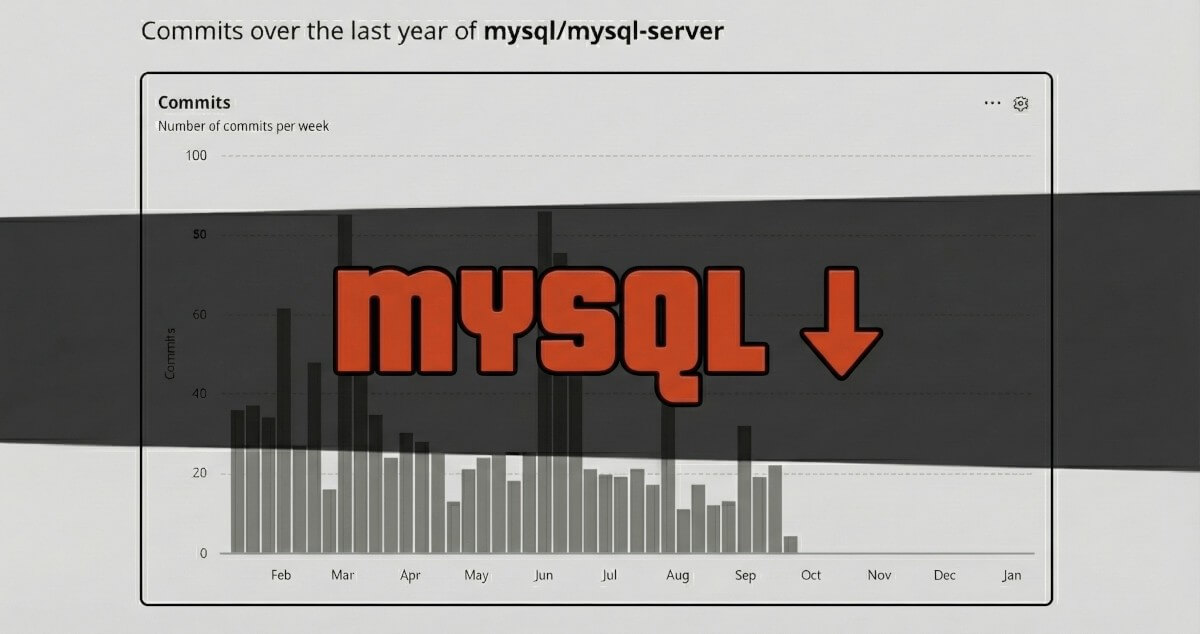
MySQL belongs to Oracle. That’s literally all you need to.know in order to avoid it.

how did the joke go? “one rich asshole called larry ellison”?
what’s the joke part?
It spells Oracle.
Isn’t that the point of Postgresql. It’s basically an open source version of MySQL.
I’m sure there are some proprietary nonsense that MySQL has, but I’ve never needed it in 17 years
afaik MariaDB is the open source version of MySQL
Postgres is basically an open source version of Oracle DB. Much more featureful than MySQL. I believe Oracle bought MySQL just to kill it.
Oracle sees itself as an activist organization, one whose goal is the advancement of the Israeli colonization project. Safra Catz, the company’s Israeli-American CEO, bluntly explained that any employees uncomfortable with supporting a genocide should simply quit. “We are not flexible regarding our mission, and our commitment to Israel is second to none” (source)
Hmm, MySQL or PostgreSQL—how will we ever decide which one to pick.
wow, I didn’t need any more reasons not to support Oracle but thanks anyway
Didn’t Postgresql effectively win the database wars? Why use anything else?
Postgres or sqlite are the only ones I ever consider nowadays.
What year is this? No one should be using Mysql since MariaDB came about.
No one should be using MySQL since 2010.
Stop using mysql, you have postgres.
And mariaSQL
Hell, even SQLite is good enough for most small projects.
SQLite is underrated. I’ve used it for high traffic systems with no issues. If your system has a large number of readers and a small number of writers, it performs very well. It’s not as good for high-concurrency write-heavy use cases, but that’s not common (most apps read far more than they write).
My use case was a DB that was created during the build process, then read on every page load.
Wow, I never thought about storing build data in an SQLite file. That’s quite clever.
One of SQLite’s recommended use cases is as an alternate to proprietary binary formats: https://sqlite.org/appfileformat.html. Programs often store data in binary files for performance, but you get a lot of the same functionality included with SQLite (fast random access, concurrent usage, atomicity, updates that don’t need to rewrite the whole file, etc) without having to implement a file format yourself.
I’m not sure if this is still the case, but Facebook’a HHVM used to store the compiled bytecode for the whole site in a single SQLite database: https://docs.hhvm.com/docs/hhvm/advanced-usage/repo-authoritative/. Every pageload loaded the bytecode for all required files from the DB.
Fascinating read, I should definitely also make way more use of sqlite for little side projects.
Thanks for the link!They also have a (one-time fee) encryption extension.