So in my part of the country, boilers are oldfangled and fairly rare. I’ve never seen a new one installed during my lifetime. You will find them in the Northeast I gather. Recall that the United States is a huge territory with a dramatic range of climates; the several states vary their HVAC standards and practices to meet their conditions. I live in central North Carolina, these are the standards I know and shall speak on.
In my locale, forced air HVAC is typical. No boiler, no hot water pipes, save for those run from a water heater to sinks, bathtubs, washers etc. The AC system necessary down here in sweet tea Cackalacky requires large air ducts from the evaporator to the living spaces, so if you’re going to install those, you might as well also use them for winter heat rather than plumb the house for an entirely separate boiler and radiators.
The law I mentioned was written with all-electric systems in mind. The “emergency” heater is basically a big resistor; a coil of wire commonly called a “heat strip” and a contactor that connects it to 220v mains power. It’s like a toaster big enough for a man to crawl through. Mechanically simpler than a heat pump though less energy efficient, they’re intended to provide heat 1. in case the heat pump fails somehow, 2. on those “but sometimes” occasions where the temperatures dip below that which the heat pump is designed for (this used to be a bigger problem than it is now; 1960s era heat pumps were less effective in cold temperatures than modern ones), and 3. defrosting.
My home has a furnace plus air conditioner system, I don’t currently have a heat pump. I have a forced air condensing furnace, I’ll let my main man Alec explain in detail how those work, and an air conditioner. The air conditioner is almost exactly like a heat pump except no reversing valve. The furnace serves as the air conditioner’s air handler, when the thermostat is set to air conditioning it sends a compressor ON signal to the air conditioner and a fan ON signal to the furnace. Switching to a heat pump system would mean wiring up the furnace as the “emergency heat” system.
I live in a climate where a heat pump can almost provide for all heating needs, my father has a heat pump and furnace system, and in the deepest depths of winter the furnace runs about an hour a week, and a little more during those “but sometimes” cold snaps. We’re the United States, natural gas is abundant and cheap here, so it’s actually cheaper to use gas for backup heat than resistive electric.
This all does assume that mains power is up and running. The true emergency backup, for when the power grid is down, is typically an entirely separate system chosen by the whims of the homeowner. I have a natural gas fired Glo-Warm, a mechanically operated radiant heater that requires no electricity. My father has a kerosene heater and keeps 10 gallons of kerosene in his tool shed. My uncle has a wood burning stove. My neighbor has a natural gas burning whole house generator. A couple work colleagues have rooftop solar and various degrees of battery backup. We’re in “what works for you personally” territory. Most of the Texans I know have no plan whatsoever and during that blizzard that hit them a few years ago they huddled around scented candles for warmth and shat in buckets. It’s a free country, do whatever you want.


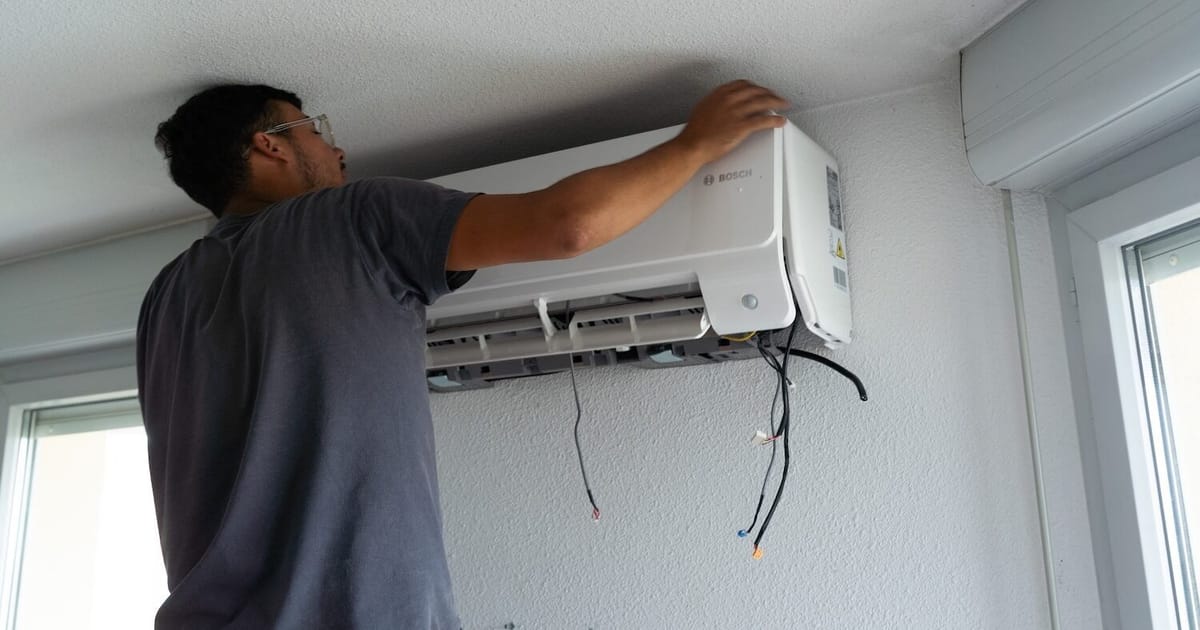
So in my part of the country, boilers are oldfangled and fairly rare. I’ve never seen a new one installed during my lifetime. You will find them in the Northeast I gather. Recall that the United States is a huge territory with a dramatic range of climates; the several states vary their HVAC standards and practices to meet their conditions. I live in central North Carolina, these are the standards I know and shall speak on.
In my locale, forced air HVAC is typical. No boiler, no hot water pipes, save for those run from a water heater to sinks, bathtubs, washers etc. The AC system necessary down here in sweet tea Cackalacky requires large air ducts from the evaporator to the living spaces, so if you’re going to install those, you might as well also use them for winter heat rather than plumb the house for an entirely separate boiler and radiators.
The law I mentioned was written with all-electric systems in mind. The “emergency” heater is basically a big resistor; a coil of wire commonly called a “heat strip” and a contactor that connects it to 220v mains power. It’s like a toaster big enough for a man to crawl through. Mechanically simpler than a heat pump though less energy efficient, they’re intended to provide heat 1. in case the heat pump fails somehow, 2. on those “but sometimes” occasions where the temperatures dip below that which the heat pump is designed for (this used to be a bigger problem than it is now; 1960s era heat pumps were less effective in cold temperatures than modern ones), and 3. defrosting.
My home has a furnace plus air conditioner system, I don’t currently have a heat pump. I have a forced air condensing furnace, I’ll let my main man Alec explain in detail how those work, and an air conditioner. The air conditioner is almost exactly like a heat pump except no reversing valve. The furnace serves as the air conditioner’s air handler, when the thermostat is set to air conditioning it sends a compressor ON signal to the air conditioner and a fan ON signal to the furnace. Switching to a heat pump system would mean wiring up the furnace as the “emergency heat” system.
I live in a climate where a heat pump can almost provide for all heating needs, my father has a heat pump and furnace system, and in the deepest depths of winter the furnace runs about an hour a week, and a little more during those “but sometimes” cold snaps. We’re the United States, natural gas is abundant and cheap here, so it’s actually cheaper to use gas for backup heat than resistive electric.
This all does assume that mains power is up and running. The true emergency backup, for when the power grid is down, is typically an entirely separate system chosen by the whims of the homeowner. I have a natural gas fired Glo-Warm, a mechanically operated radiant heater that requires no electricity. My father has a kerosene heater and keeps 10 gallons of kerosene in his tool shed. My uncle has a wood burning stove. My neighbor has a natural gas burning whole house generator. A couple work colleagues have rooftop solar and various degrees of battery backup. We’re in “what works for you personally” territory. Most of the Texans I know have no plan whatsoever and during that blizzard that hit them a few years ago they huddled around scented candles for warmth and shat in buckets. It’s a free country, do whatever you want.