I am not sure the majority of genAI 3d models are even usable as is. 3d prints need a conscious approach that optimizes them for being printed bottom2top, with popular precision/nosle sizes options in mind, with more interesting build using that limitation to their advantage - see e.g. infill printing on chain-connected toys you probably saw sold in bulk on marketplaces - from free designs on the internet, not to mention springs and other material/technology-dependant tricks. 3d models for animation and wiring need to have clean topology to render without surprise glitches and wasting cpu time. And I’m not even talking about super serious CAD stuff that needs consistency and precision in the smallest details.
I had little time with 3d, but from what I had with vector images and auto tracing, broken or/and overcomplicated geometry can lead one to a point it’s just easier to redraw the thing than trying to fix it.


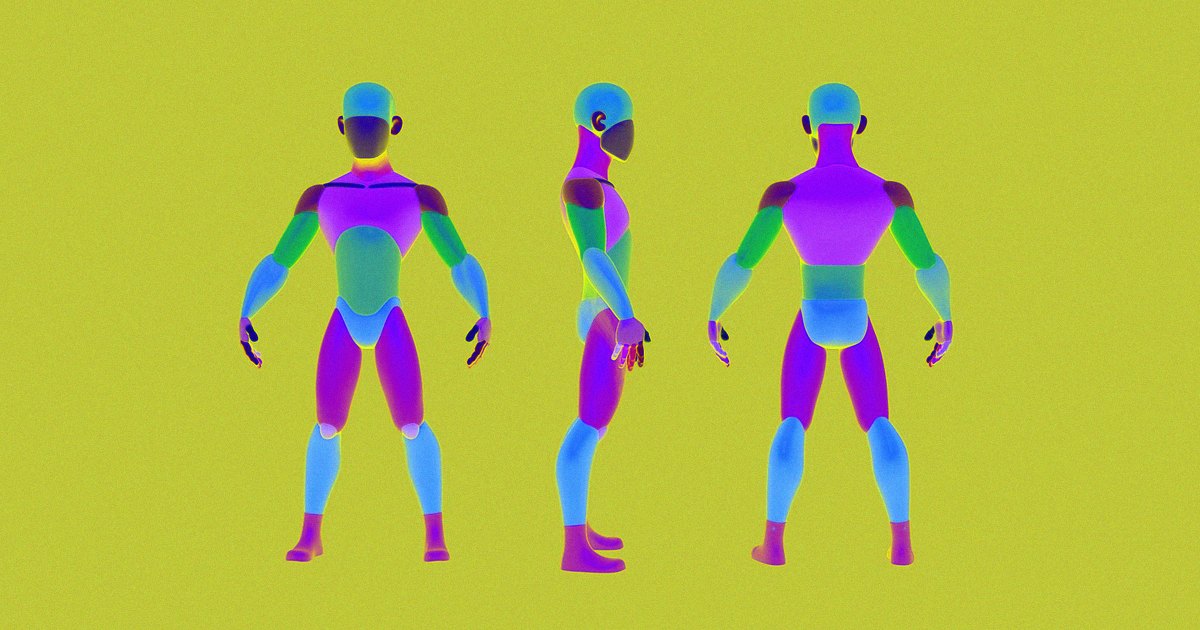
I am not sure the majority of genAI 3d models are even usable as is. 3d prints need a conscious approach that optimizes them for being printed bottom2top, with popular precision/nosle sizes options in mind, with more interesting build using that limitation to their advantage - see e.g. infill printing on chain-connected toys you probably saw sold in bulk on marketplaces - from free designs on the internet, not to mention springs and other material/technology-dependant tricks. 3d models for animation and wiring need to have clean topology to render without surprise glitches and wasting cpu time. And I’m not even talking about super serious CAD stuff that needs consistency and precision in the smallest details.
I had little time with 3d, but from what I had with vector images and auto tracing, broken or/and overcomplicated geometry can lead one to a point it’s just easier to redraw the thing than trying to fix it.