

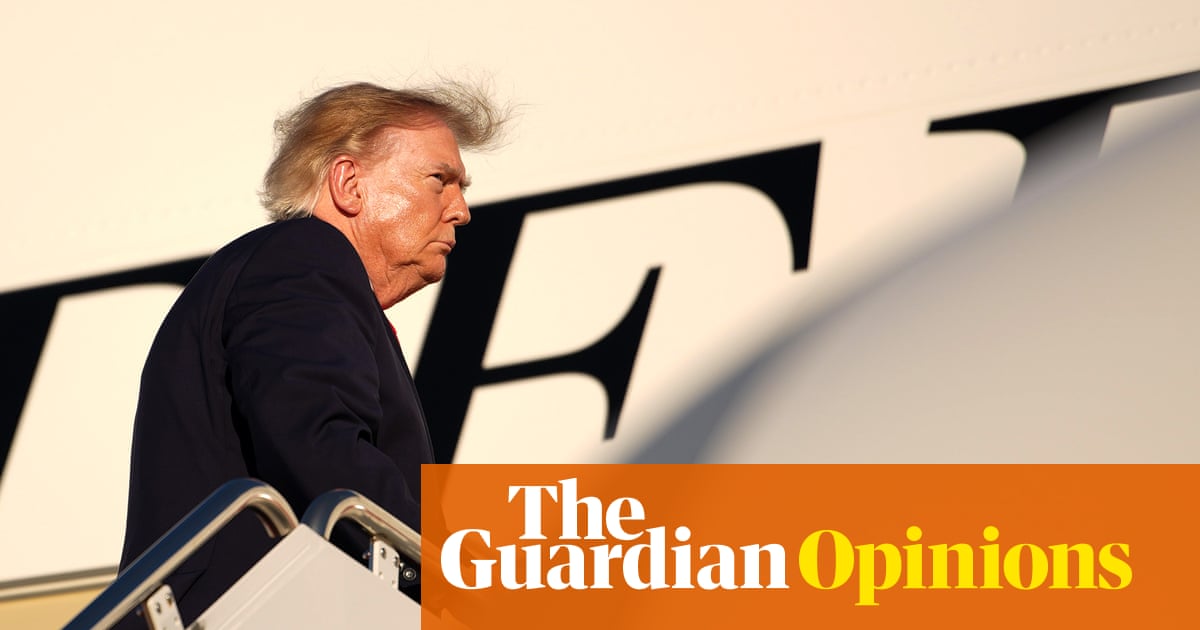
From betraying Ukraine and dispatching masked agents who killed Americans to deporting US citizens and pulling out of accords controlling climate change and Iranian nuclear weapons, the list of Donald Trump’s abuses is long and growing still longer, seemingly by the day.
Looking back decades from now, historians will see that at the top of this shameful list is Trump’s utter abuse of his pardon power. It started on the first day of his second term, when he pardoned more than 1,500 insurrectionists who, on 6 January 2021, had stormed the US Capitol.
More recently, as documented in astonishing accounts by the New York Times, Wall Street Journal and 60 Minutes, Trump has overseen a robust pardons market in which friends or relatives of criminals offer to pay millions for presidential clemency.
…
Back then, politicians were assumed to be honorable Gentlemen. This ended a long time ago, but Trump goes the extra mile to prove he is anything but.
https://www.americanheritage.com/verdicts-history-iv-scandalous-malicious-and-seditious-libel
In 1803 the infant American Republic was running a high political fever. The ferocity of the verbal warfare raging between the Federalists, the party created by Alexander Hamilton, and the Democratic-Republicans, led by President Jefferson, has rarely been matched in American politics, even by the diatribes of today’s New Left and Ultra Right.
The first fusillades had been fired during Washington’s Presidency. The Jeffersonians, with not a little help from the Sage of Monticello himself, had set up journalists such as Philip Freneau and Benjamin Franklin Bache with one mission, to deflate and discredit an administration that was, in Jefferson’s view, “galloping fast into monarchy.” They soon had the Father of His Country in a state of near apoplexy. “That rascal Freneau,” as Washington called him, insisted on sending his scurrilous National Gazette, published in Philadelphia, to the President’s house even after he had cancelled his subscription. Freneau spent most of his abuse on Hamilton. Baclic preferred Washington as a target, calling him “treacherous,” “mischievous,” “inefficient,” and sneering at his “farce of disinterestedness” and his “stately joumeyings through the American continent in search of personal incense.”
These verbal guerrillas soon had imitators. Among the more savage was William Duane, Bache’s successor as editor of the Philadelphia Aurora. Washington, he wrote, had “discharged the loathings of a sick mind.” Even this was topped by an English newcomer, James T. Callender. In the Richmond Examiner he declared that “Mr. Washington has been twice a traitor.”
Well yes, but also the concept of honour back then was dictated largely by rich slave owners. So…
I’d trust the honor of a slaveowner over the proud cruelty we have now. It’s not like the fascists are less racist.
The whole context is 22 words bud, I know you can read that much. I like Community but even as a joke reference it’s a reach.
That may be, but it’s dangerous to guess at a distance. And time is a distance all its own
Fascist is bad enough, but even Hitler would cringe at the idea of a goddamn pedophile being in charge (assuming he wasn’t one himself).
The Nazi Party was flush with pedophiles
I don’t doubt it, it’s just more depressing.
“assuming he wasn’t one himself” look up Geli Raubal and the allegiations of abusive sexual relationship between her (as a minor) and Hitler. Moreover, they were relatives. Just like Ivanka and Donnie Daughterfucker.
I did not know, but it’s not fucking surprising.