

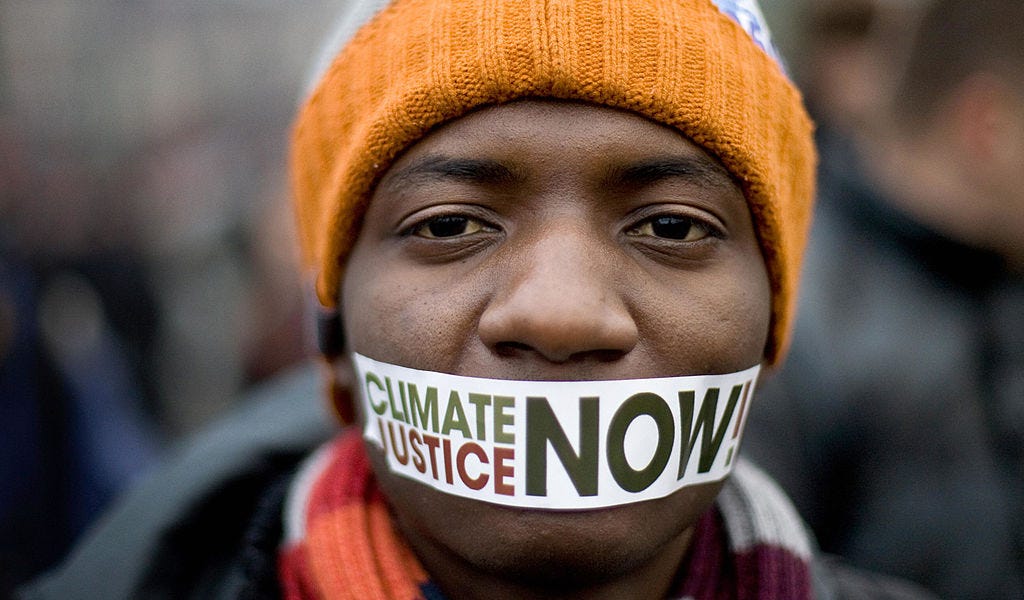
But for how important this election will be for Planet Earth and the humans who live on it, the issue itself isn’t getting much airtime. Earlier this month, The Guardian examined the campaign websites of Democratic and Republican Senate candidates in eight battleground states. Of all the candidates surveyed, only two explicitly mentioned climate change.
This retreat hasn’t happened by accident. Over the last two years, some of the Democratic Party’s most influential strategists, donors, and think tanks have been explicitly telling candidates to shut up about climate change and focus on the economy instead—as if those were two separate issues.
It’s a strategy known as climate hushing. And with the midterms fast-approaching, it’s worth asking: Who convinced Democrats that ignoring climate change was a winning strategy? Does the evidence actually support that argument? And what is that silence costing the rest of us?
From a campaign perspective you want a clear, concise message.
There are a gazillion things that need taking care of, but the reality is if you spend time talking about all of them, the message won’t get out and elections will be lost.
This is very true. Slogans work. “We’re not going back” was stellar, but the dunbasses running Kamala dropped it.
A phrase as simple that resonates not just with Lemmy, but the middle of the bell curve people, is needed.
Republicans are really good at it. Dems, never. Too many wet cats swiping at each other and arguing about what’s most important.
A main message sure, but the idea that an electoral campaign can or should only have one message doesn’t match up with reality and is—I’m sorry—frankly bullshit. Pick a Senator or Representative at random and see what their platform was when they got elected. Candidates right now are running on parallel messages of affordability and protecting democracy, and Abdul El Sayed—one of the most successful progressives currently campaigning—also has healthcare as a core part of his platform and I’m pretty sure I remember him talking about foreign wars. Before you respond next you should take a moment to consider why you just said something that’s so obviously untrue.
Edit: Besides, somebody should at least be talking about all the wildfires.
Sure, in interviews they can parse shit out, and that is a good thing, but what is the sell phrase? Whitmer won in Michigan based on “Fix the Damn Roads!” Having driven on them, I can tell you, it’s a byline that could reach every person in that state.
People are busy. They’re not reading what you read. No one is reading what you read, or what I read, that’s how fractured information dissemination is right now. We all consume different news, if any at all.
When the working class majority walk to their voting center, dragging their asses there after having worked 11 shifts in the 7 days prior, what’s the single line that’s going to make them want to spend the energy and not just collapse on their bed?
If you spew multiple things at them they’ll probably just go to bed.
You should take a moment to understand American voters. And also to not be an ass.
I’m sorry that you don’t under stand that US politics is decided on a small handful of issues. Recognizing that isn’t “stupid” it’s simply paying the fuck attention.
If you really want to know where a candidate stands on climate change, I’m sure you can find that, or just ask their campaign and get an answer. But they’re only going to hammering on a few issues because that’s how the America voter just is.
Re-read what you just wrote about El-Sayed.
That’s two things.
His messaging in detail about what those two things means and what he’s gonna do about it include things like Medicare for all, and ending costly foreign wars and removing corruption. Personally, it’s actually only one thing. Because right now Trump’s and the rest of the admin’s rampant corruption is the primary cause of affordability.
You’re acting like they have to message on every topic. And no single campaign (especially national campaigns, but state wide campaigns are bad enough,) can cover every single topic you might be interested in; and right now these things are what Americans are into so that’s what they’re driving home.