That is a bit besides the point. My point was that car traffic did not move to parallel streets like Gumpendorfer Straße, even though there was very heavy traffic on Mariahilferstraße previously. The traffic simply disappeared. If that is the case, it really does not matter if and what kind of cycling roads are around it, none of them will see a strong rise in car traffic.
Besides your point, not mine, plus the OSM history suggests Mariahilferstrasse was only a secondary highway, not a primary like CHS was, so I’d still love to see real data about Camden’s pedestrianisation showing that the motor traffic has really disappeared without also making cycle traffic disappear, and not blindly trust it’s possible to extrapolate from demotorisation of a less important highway in a smaller city.
You were talking about issues for cyclists because of diverting car traffic, or did I misunderstand you?
Mariahilferstraße was a real traffic hell. On maps it might have been classified lower in priority but if you had seen it in the good old days, the main difference was that it had less throughput in cars because it was more traffic jammed than other routes.
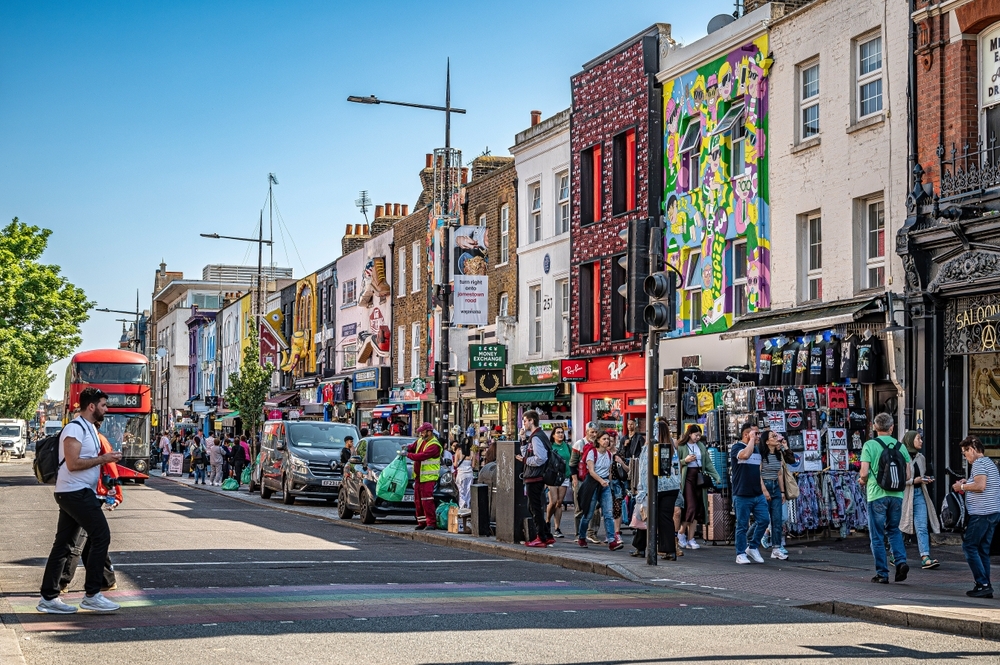
That said, Camden High Street appears to be a 4 lane road. So that is indeed somewhat worse. So kudos for the planners that they are doing something about it. Of course there should be supporting actions but they certainly shouldn’t be relocating traffic or making other streets worse.
I don’t have any data but yes, it would be interesting to see what the 18 month test run was doing to traffic patterns. If cyclist routes had been really impacted, actions should be taken to upgrade cycling infrastructure, or priority in the cylicing/car mix of modes along key routes.

That is a bit besides the point. My point was that car traffic did not move to parallel streets like Gumpendorfer Straße, even though there was very heavy traffic on Mariahilferstraße previously. The traffic simply disappeared. If that is the case, it really does not matter if and what kind of cycling roads are around it, none of them will see a strong rise in car traffic.
Besides your point, not mine, plus the OSM history suggests Mariahilferstrasse was only a secondary highway, not a primary like CHS was, so I’d still love to see real data about Camden’s pedestrianisation showing that the motor traffic has really disappeared without also making cycle traffic disappear, and not blindly trust it’s possible to extrapolate from demotorisation of a less important highway in a smaller city.
You were talking about issues for cyclists because of diverting car traffic, or did I misunderstand you? Mariahilferstraße was a real traffic hell. On maps it might have been classified lower in priority but if you had seen it in the good old days, the main difference was that it had less throughput in cars because it was more traffic jammed than other routes.
That said, Camden High Street appears to be a 4 lane road. So that is indeed somewhat worse. So kudos for the planners that they are doing something about it. Of course there should be supporting actions but they certainly shouldn’t be relocating traffic or making other streets worse.
I don’t have any data but yes, it would be interesting to see what the 18 month test run was doing to traffic patterns. If cyclist routes had been really impacted, actions should be taken to upgrade cycling infrastructure, or priority in the cylicing/car mix of modes along key routes.