All I’m saying is that determinism has a specific meaning in computer science. In an LLM, the rng value is determined by the seed. Given the same inputs, an LLM always produces the same output. It does not matter whether the user understands the code or operation at all. It is purely dependent on the program itself.
A non-deterministic program, is one where the output is determined by factors outside the code itself. This usually requires non-deterministic programming language constructs. For example, if you convert a set to a list in python, the order of the elements is non-deterministic. Out of the control of the program. Same inputs, different output.
The seed is generated by an random sampling algorithm that works on the epoch. Yes if you keep the seed fixed, the outcome will be the same but the seed is not the same, and you don’t have any control on it anyways when you’re using an api.


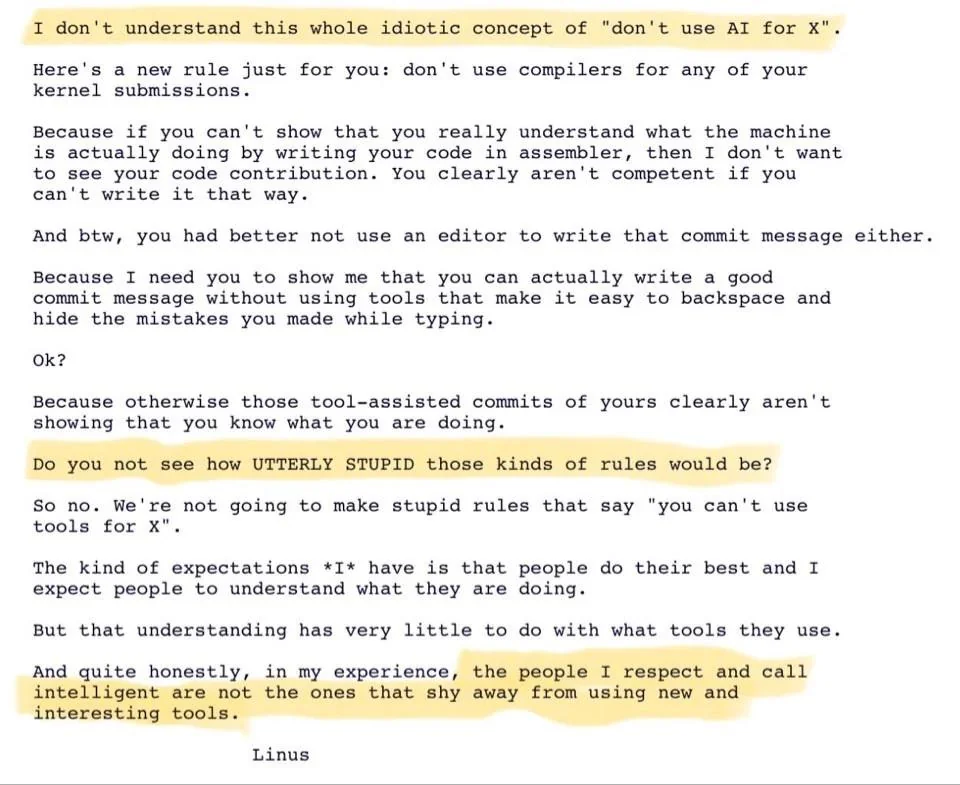
AI is not deterministic at all, only if you keep the seed values for generating random numbers the same all over the pipeline.
It’s literally a huge stochastic model.
All I’m saying is that determinism has a specific meaning in computer science. In an LLM, the rng value is determined by the seed. Given the same inputs, an LLM always produces the same output. It does not matter whether the user understands the code or operation at all. It is purely dependent on the program itself.
A non-deterministic program, is one where the output is determined by factors outside the code itself. This usually requires non-deterministic programming language constructs. For example, if you convert a set to a list in python, the order of the elements is non-deterministic. Out of the control of the program. Same inputs, different output.
The seed is generated by an random sampling algorithm that works on the epoch. Yes if you keep the seed fixed, the outcome will be the same but the seed is not the same, and you don’t have any control on it anyways when you’re using an api.