

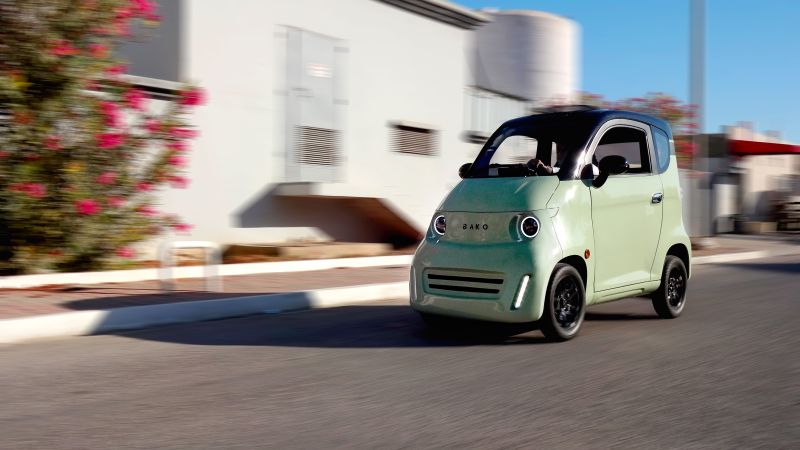
“The solar cells provide us with more than 50% of our needs,” says Boubaker Siala, founder and CEO of Bako Motors. “For example, the B-Van, for commercial use, you can have free energy for about 50 kilometers (31 miles) per day… 17,000 kilometers (10,563 miles) per year. ……… The B-Van, which can carry 400 kilograms (882 pounds) of cargo and has a 100 to 300-kilometer (62 to 186 mile) range, is designed for logistics and last-mile delivery, with prices starting at 24,990 Tunisian dinar ($8,500)."
It varies widely by vehicle type, etc - but travelling 31 miles costs you in the ballpark of $3 in the US or €5 in Europe. So that’s around $1,000/€1,800 of free fuel every year if you were using this vehicle most days. The B-Van is small, but perfect for local deliveries, especially if paired with swappable batteries.
You know what will never pay for itself with its self-generation fuel capacity? A gasoline combustion-engine car. Here’s another pointer, they’re rapidly becoming the transport option of yesteryear.
The solar-powered compact car driving Tunisia’s electric vehicle revolution
you can just stop there. we have so much wasted surface space that doesn’t need to move and is just wasted, collecting heat instead of power - roofs, carpaks, hell, they’re finding it’s good for crop lands. we know what we need to do, we simply can’t get the petroleum earth rapists to give up their fetishes.