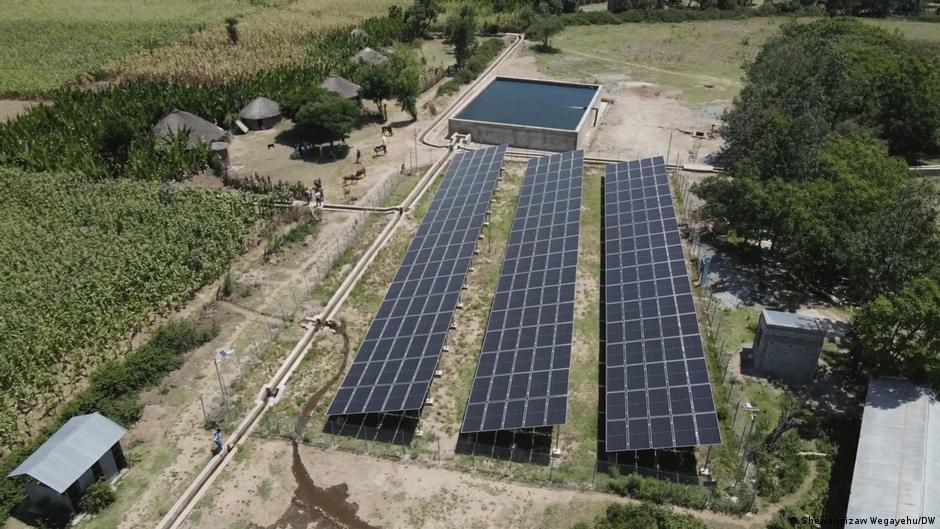
Renewable electricity is cheaper than ever. While the West got rich on coal and oil, some of the world's poorest countries are banking on solar, wind and water instead.
Whoops. I got it wrong, sorry. If we follow Victron’s recommendations (4.8 kWh backup for 1.5 kWp generation) than for 6 kWp the LiIon backup (AC-coupled) would be pretty exactly 20 kWh. So your numbers are perfectly balanced.
The problem with just scaling up is that in winter months I can easily see 1/20th to 1/40th of PV nameplate during daytime, and such conditions can persist for more than a month. So without the grid as a backup the only option is diesel generation backup, or going entirely without any major power drain.
For low-consumer countries in the tropics the equation is much easier, since they’re consuming less than Westerners in general.
A model for Canada, does require enough solar for just 1 hour total sun to meet electricity needs (for winter). Backup heating necessary, but hydronic and heat pump (reversible heat/AC split units per room) is good use of fall solar to charge up a hot water reservoir that also gets recharged on sunny winter days. An EV that can charge the home counts as a backup heat source. This can mean much higher solar production for 9-10 months than you can use, but also means profitable bitcoin mining or GPU rental for that period. And/or free EV charging, hottub/pool heating, or other energy sinks that become free, off grid.
Canada/Ontario has corrupt electricity system, with $50/month flat fee. So a $50-$100/month equivalent (5x above investment) off grid cost is a better energy opportunity/alternative especially including vehicle fuel savings, but also in new construction heating system cost savings. A fireplace or woodstove may be an arguable quality of life improvement, instead of just a heating appliance.


Whoops. I got it wrong, sorry. If we follow Victron’s recommendations (4.8 kWh backup for 1.5 kWp generation) than for 6 kWp the LiIon backup (AC-coupled) would be pretty exactly 20 kWh. So your numbers are perfectly balanced.
The problem with just scaling up is that in winter months I can easily see 1/20th to 1/40th of PV nameplate during daytime, and such conditions can persist for more than a month. So without the grid as a backup the only option is diesel generation backup, or going entirely without any major power drain.
For low-consumer countries in the tropics the equation is much easier, since they’re consuming less than Westerners in general.
A model for Canada, does require enough solar for just 1 hour total sun to meet electricity needs (for winter). Backup heating necessary, but hydronic and heat pump (reversible heat/AC split units per room) is good use of fall solar to charge up a hot water reservoir that also gets recharged on sunny winter days. An EV that can charge the home counts as a backup heat source. This can mean much higher solar production for 9-10 months than you can use, but also means profitable bitcoin mining or GPU rental for that period. And/or free EV charging, hottub/pool heating, or other energy sinks that become free, off grid.
Canada/Ontario has corrupt electricity system, with $50/month flat fee. So a $50-$100/month equivalent (5x above investment) off grid cost is a better energy opportunity/alternative especially including vehicle fuel savings, but also in new construction heating system cost savings. A fireplace or woodstove may be an arguable quality of life improvement, instead of just a heating appliance.