
link to open access article https://agupubs.onlinelibrary.wiley.com/doi/10.1029/2025GH001727
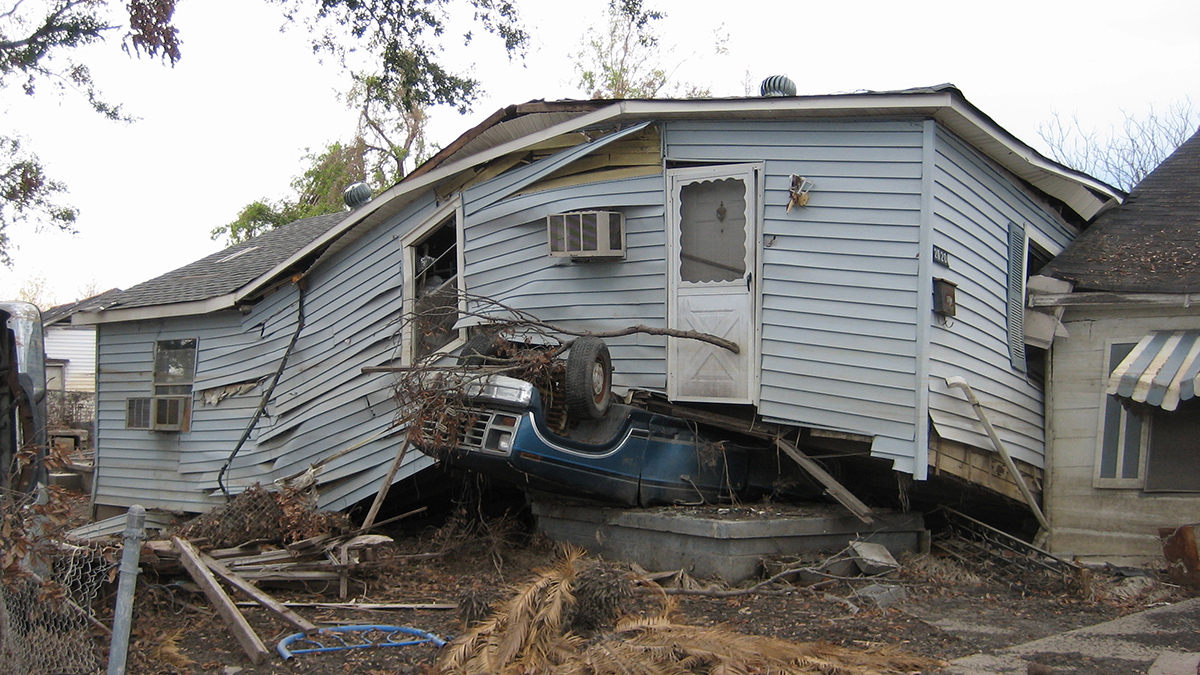
A long-term positive shift in regional social vulnerability does not necessarily indicate improvements for the people most affected by tropical cyclones. Instead, this apparent improvement may be driven by population shifts following tropical cyclones, rather than by improved conditions for the people who suffered the most. Climate gentrification is a well-described phenomenon in which the effects of climate hazards lead to changes in the social and physical fabric of affected regions (Anguelovski et al., 2019; Freeman, 2005). The literature has found that low-income communities, people of color, and migrant communities are more likely to experience residential and social displacement, but at the same time, rebuilding efforts often attract an influx of wealthier residents and increased investment in affected areas after major hurricane disasters (Aune et al., 2020; Greenberg, 2014; Van Holm & Wyczalkowski, 2019).
Recently, a spatial analysis of Orleans Parish after Hurricane Katrina found significant racial turnover as investment flowed to safer, higher-elevation neighborhoods, displacing the original low-income, predominantly Black communities (Aune et al., 2020). Our findings echo the direction of these shifts, showing a statistically significant, albeit small, decreasing trend in Minority Status SVI (Figure 4d) over years 9–14 post-exposure, suggesting that the ethnic composition of affected communities gradually shifts over time, potentially serving as a broad quantitative indicator of gentrification.
…
Moving forward, it is critical to address these complexities through stratified analysis by storm intensity and frequency, which would help identify the specific thresholds that trigger changes in community vulnerability and to understand the compounding effects of multiple exposures over time. To overcome inherent challenges with vulnerability measures and to make more robust conclusions, future work should integrate multiple vulnerability measures and make use of advanced techniques in causal inference in panel data. Finally, more granular analyses on specific categories of social vulnerability–perhaps through targeted case studies–will reveal localized dynamics that are masked at the county level. Through present and future work, we could better understand the social and health disparities faced by communities affected by tropical cyclones and inform targeted interventions that promote equitable recovery in the aftermath of tropical cyclone events.