

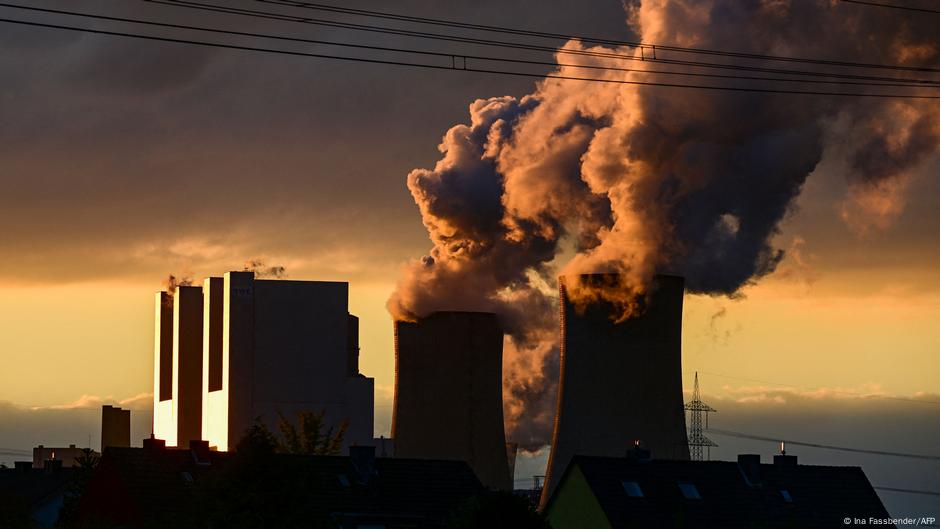
"German Environment Minister Carsten Schneider told the UN General Assembly on Wednesday that the plan “combines independence, affordability and climate protection…It is not just extreme weather events around the world that demonstrate how urgently we need to do more to protect the climate,” he said. “If the situation in the Strait of Hormuz determines whether people can still afford their daily commute to work, that is not a good state of affairs.”
If there’s been an upside to the Middle East War, it’s that it’s been a giant advertisement for renewable energy. Not just cheaper, cleaner, & better, crucially it means energy-independence, too.
Smart move by Germany. Their industrial and manufacturing base is getting clobbered by China because they stuck with the dying fossil fuel paradigm for too long. Every other EU nation has committed to ending fossil fuel use, hopefully this further accelerates their efforts, too.
They just pumped another 2,5 billion euros into making petrol at the pump cheaper for everyone… Surely a government truly commited to this energy transition would have invested those 2,5 billions elsewhere ay
It’s a short term solution to help poor people who are most affected by rising fuel costs. Would it be better to invest that money in something else? Probably, but people need help, and ignoring them just punishes the wrong people.
The thing is that it also helps people who don’t need it and most of all it helps the fossil fuel industry. So it really just is a subsidy for fossil fuel. They could have supported poor people with more targeted solutions.
Like what? By my math, €2.5B affords 14.5B km of travel. I guess they could buy a bunch of EVs for people? €2.5B could purchase around 47,000, but the cash infusion would raise prices so that’s not terribly accurate. The one thing they could do the German government will not do is allow Chinese BEV brands in without tariffs.
Yeah but its a bad solution here aswell. Since the fossil Industry just ups their profits from it and they don’t have a cap on the price. So its basically just tax money gifted, that got cut from social funding.
Giesskanne is the dumbest way possible to do this. Yes, some people need support now, I agree. Certain professions, certain kinds of cars. But the way they do this now I am de facto financing the gassing up of many very inefficient cars owned by people do not care about climate and do not need the discount because they have/earn plenty anyway. It would be a perfect time to introduces tempolimit on autobahn, that would save a large amount of petrol (and many other positive side effects) and as we know a lower demand lowers the price of scarce products. What they do now is quite the opposite of trying to reach 100 % renewable in 20 years… It is a very bad policy decision in every single way imaginable, for climate, for tax payers and the health of the public budget, for the future of the economy: on every single level this is a bad policy.
What’s a tempo limit? A limit on how many beats per minute a song can have?
Speed limit
Can’t the people who need it the most take the bus?
It’s not only about transport of themselves, food prices are increasing, and have been since covid.
The people who are affacted most by food prices are also the people living in low cost of living areas, where the salaries are also the lowest, and you’re not going to find a lot of busses in the countryside.
Go find a bus when you must clock in at 5am.
deleted by creator
A country could easily become carbon neutral by killing all of its citizens.
But you wouldn’t advocate for that, because while it would succeed in the semantics it would fail in the pragmatics.
The citizens have to be able to survive the transition, bro.
The citizens aren’t going to survive either way at this rate
When people actually were literally dying during the unprecedented climate change induced heatwaves, they were all quiet and no-one got a single cent to buy airco
No one is dying and the 17 cent discount per litre is making no one who is dying, survive. There are not less cars on the roads, people are not driving less kilometres now than when fuel was 1,55 € per litre instead of 2,5 € now. Apparently many many people with valid alternatives like e-bikes still choose cars despite the price increase. One could for example support industries like agriculture or heavy transport where transitioning is harder and higher prices mean bankruptcy. They didn’t, they chose populist catch all at the pumps and the reason is not impending starvation of people or economic sense, the reason is Merz not wanting to give up power, Reiche being a gas industry employee and afd threatening them in regional elections.